Precision Dental Bridges in Greater Kailash 1 | Tooth & Tonic
Fixed Tooth Replacement, Metal-Free Ceramic Bridges & Restorative Occlusal Care in GK 1
A missing tooth compromises far more than the visual harmony of your smile. When a gap is left unaddressed, the surrounding dentition undergoes gradual shifting: adjacent teeth tilt and drift into the empty space, opposing teeth supra-erupt (grow downward or upward out of their bony sockets), and normal bite distribution is disrupted. Over time, this dental migration triggers uneven enamel wear, difficulty in chewing, speech articulation changes, and excessive mechanical strain on the temporomandibular joints (TMJ).
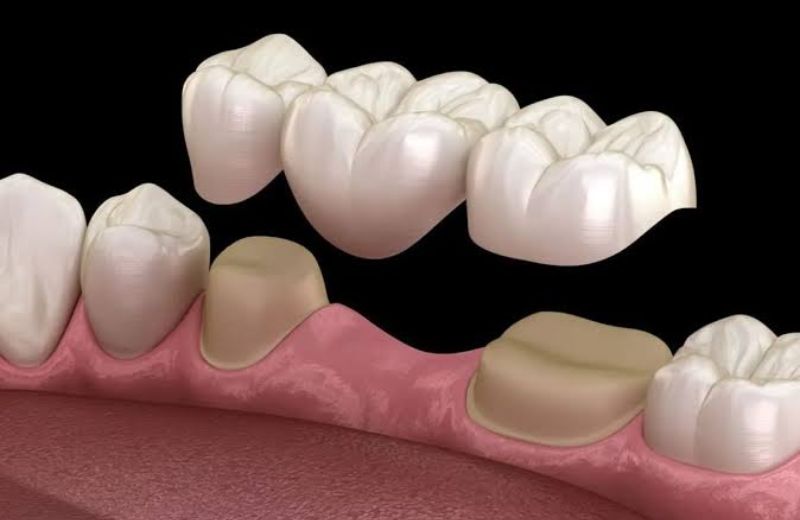
At Tooth & Tonic, located in Block R, Greater Kailash-1, dental bridges are designed with conservative tooth preparation, digital precision, and biomimetic materials. A dental bridge is a fixed, non-removable prosthetic restoration that spans the space left by one or more missing consecutive teeth. Anchored securely onto prepared adjacent natural teeth (abutments) or integrated dental implants, our bridges restore complete chewing function, stabilize the dental arch, and recreate natural smile aesthetics without removable plastic plates.
Advanced Restorative Materials & Technology at Our GK 1 Clinic
Traditional dental bridges often relied on metal frameworks layered with porcelain (PFM), which over time could reveal dark, unesthetic gray lines at the gumline or chip under chewing stress. At our Greater Kailash 1 practice, we utilize modern metal-free materials engineered for lasting durability and lifelike light dynamics:
- Monolithic High-Translucency Zirconia: Fabricated from solid blocks of biocompatible zirconium oxide, monolithic zirconia bridges offer unmatched fracture resistance. They easily endure the heavy chewing forces exerted on back molars while providing a smooth, natural tooth-colored finish that minimizes wear on opposing teeth.
- Lithium Disilicate (IPS E.max): Ideal for front teeth and visible premolar gaps, E.max glass-ceramic offers optimal optical translucency and lifelike light refraction, replicating natural enamel characteristics.
- Porcelain-Fused-to-Zirconia (PFZ): Combines the strength of a precision-milled zirconia structural framework with hand-layered aesthetic porcelain, delivering exceptional beauty in the visible aesthetic smile zone.
- 3D Intraoral Digital Scanning: We eliminate conventional, uncomfortable alginate or putty impressions. Our high-resolution intraoral scanners capture thousands of optical 3D data points per second, creating a virtual model of your teeth and bite registration within minutes.
- CAD/CAM Computerized Milling: Every bridge is designed via specialized digital software and milled on high-precision computerized milling units, ensuring sub-millimeter marginal fit along the gumline to prevent bacterial leakage.
- Optical Magnification Preparation: Using dental operating loupes with shadow-free LED illumination, our clinicians prepare abutment teeth with conservative margins, preserving as much sound, natural tooth structure as possible.
Types of Dental Bridges Offered
- Traditional Fixed Dental Bridges: The most common configuration, consisting of a replacement tooth (pontic) fused between two crowns that fit over the natural teeth adjacent to the gap.
- Cantilever Bridges: Indicated when healthy support teeth are present on only one side of the missing tooth gap. These are planned carefully after thorough bite-force evaluation.
- Maryland (Resin-Bonded) Bridges: A conservative option frequently used for missing front teeth. The replacement tooth features ceramic or composite “wings” that bond directly to the backs of adjacent teeth, requiring minimal to no removal of natural enamel.
- Implant-Supported Bridges: When multiple consecutive teeth are missing, dental implants can serve as the foundational anchors instead of natural teeth, eliminating the need to prepare healthy adjacent enamel.
Schedule a Restorative Consultation in Greater Kailash 1
Replace missing teeth, stabilize your bite, and smile with confidence using custom-crafted ceramic dental bridges at Tooth & Tonic.
- Direct Call: 098216 54499
- WhatsApp Direct: Message Us on WhatsApp
- Clinic Address: R 98, Lower Ground Floor (LGF), Block R, Greater Kailash-1, New Delhi, Delhi 110048
- Convenient Access: Located in Block R, GK 1, just a few minutes from M-Block and N-Block markets, with reserved patient parking assistance and direct ground-level access.
Step-by-Step Clinical Workflow at Tooth & Tonic GK 1
- Diagnostic Evaluation & Radiographic Analysis: We examine the site using low-radiation digital RVG X-rays or 3D CBCT scans to verify the root health, bone density, and structural integrity of the proposed anchor teeth.
- Comfort Anesthesia: Localized numbing is applied gently to the treatment zone, ensuring complete physical comfort throughout the tooth contouring phase.
- Conservative Abutment Preparation: The natural teeth on either side of the space are carefully reshaped under optical magnification, creating precise, smooth margins to support the anchor crowns.
- Mess-Free 3D Optical Scan: Our optical scanner captures a complete 3D digital model of your prepared teeth, opposing arch, and bite alignment, which is sent directly to the dental laboratory.
- Aesthetic Temporary Bridge: A temporary acrylic bridge is custom-fabricated and placed chairside to protect exposed dentin, prevent temperature sensitivity, and maintain functional chewing while your permanent bridge is engineered.
- Try-In & Bite Calibration: Once the laboratory completes fabrication, you return for a try-in appointment. We check the shade match, contour harmony, marginal seal, and bite dynamics with opposing teeth.
- Definitive Adhesive Cementation: Using high-strength, moisture-resistant resin bonding agents, the permanent bridge is anchored in place, establishing an airtight seal against oral bacteria.
Comparing Tooth Replacement Solutions
| Feature | Fixed Ceramic Dental Bridge | Single / Multi-Tooth Dental Implant |
| Treatment Timeline | Rapid completion (typically 2 visits over 3–5 days) | 3 to 6 months for bone osseointegration |
| Surgical Requirement | Non-surgical; conservative tooth reshaping | Minor surgical placement into the jawbone |
| Support Foundation | Anchored to adjacent natural teeth or implants | Anchored directly into the jawbone |
| Bone Preservation | Does not stimulate bone beneath the empty pontic | Stimulates alveolar bone, preventing bone loss |
| Suitability | Ideal when adjacent teeth already have large fillings | Ideal when adjacent teeth are completely virgin |
Caring for Your Dental Bridge: Daily Maintenance
While a dental bridge cannot develop cavities, the natural teeth underneath the supporting crowns and the gumline around the pontic remain vulnerable to plaque accumulation:
- Clean Beneath the Pontic Daily: Food particles and bacterial biofilm can gather in the narrow space between the false tooth and the gums. Use specialized bridge floss (superfloss), floss threaders, or an interdental brush daily.
- Utilize an Oral Irrigator (Water Flosser): A water flosser cleans hard-to-reach contours around bridge margins and flushes out trapped debris effortlessly.
- Twice-Daily Brushing: Brush with a soft-bristled toothbrush and fluoride toothpaste along the margin where the bridge meets the natural gumline.
- Regular Dental Cleanings: Schedule professional scaling and polishing every six months at our GK 1 clinic to keep surrounding tissues healthy and verify marginal seal integrity.
Frequently Asked Questions for Greater Kailash 1 (GK 1) Patients
How long does a dental bridge typically last?
A high-quality ceramic or zirconia bridge typically lasts between 10 to 15 years, and often longer with consistent oral hygiene, regular cleanings, and the avoidance of habits like biting hard objects or opening packaging with your teeth.
Is getting a dental bridge a comfortable procedure?
Yes. Tooth preparation is carried out under targeted local numbing, ensuring you remain comfortable throughout the appointment. Mild, temporary gum tenderness can occur around the preparation line for a couple of days as soft tissues adjust to the new contours.
Can a dental bridge replace more than one missing tooth?
Yes. A bridge can successfully replace two or three consecutive missing teeth, provided the supporting anchor teeth possess sufficient root length, healthy bone support, and strong structural stability. For longer spans, implant-supported bridges are often recommended to avoid overloading natural teeth.
Can you replace an old metal-ceramic (PFM) bridge with a modern ceramic bridge?
Yes. We frequently replace older bridges that have developed black margins at the gumline, experienced porcelain chipping, or have decaying margins with all-ceramic or monolithic zirconia bridges that provide superior aesthetics and biocompatibility.
How do I clean underneath the replacement tooth (pontic)?
Because the replacement tooth is fused to the anchor crowns, you cannot pass ordinary floss down from the top. We instruct you on using floss threaders, spongy superfloss, or interdental brushes that slide comfortably underneath the false tooth to keep the tissue clean and healthy.
Where is Tooth & Tonic located in Greater Kailash 1?
Tooth & Tonic is located at R 98, Lower Ground Floor (LGF), Block R, Greater Kailash-1, New Delhi 110048. We are centrally situated in GK 1, just a short 3- to 5-minute drive from M-Block Market and N-Block Market. The practice is easily accessible from surrounding South Delhi neighborhoods including Greater Kailash 2 (GK2), Kailash Colony, East of Kailash, Nehru Place, Chittaranjan Park (CR Park), and Panchsheel Park. Reserved patient parking and valet assistance are available.
How many appointments are required to complete a dental bridge?
A standard bridge is typically completed across two visits. During the first visit (45–60 minutes), the anchor teeth are prepared, digitally scanned, and fitted with a protective temporary bridge. The second visit (20–30 minutes), scheduled about 3 to 5 days later, involves verifying the fit and permanently bonding the final restoration.