Microscope-Assisted Root Canal Treatment in Greater Kailash 1 | Tooth & Tonic
Precision Endodontics, Single-Visit Pulp Therapy & Conservative Tooth Preservation in GK 1
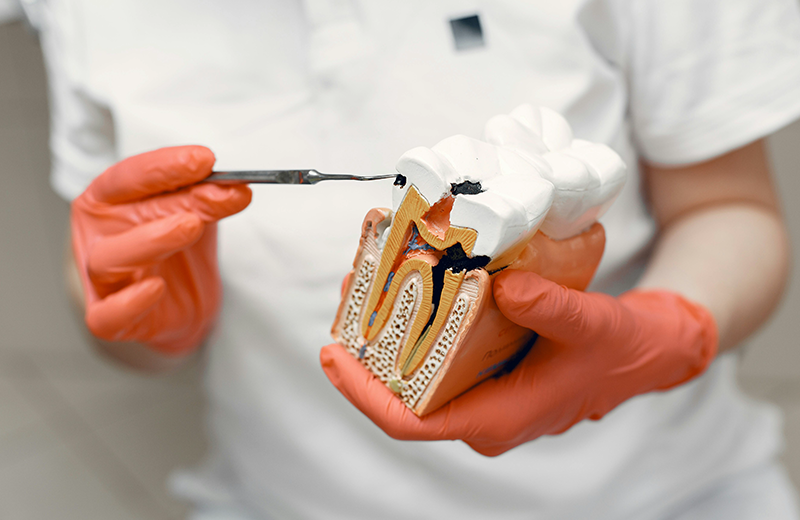
A severe toothache, persistent sensitivity to temperature, or localized gum swelling often indicates that bacterial decay has breached the protective outer layers of enamel and dentin, penetrating the living dental pulp. The dental pulp contains vital nerves, blood vessels, and connective tissue. When compromised by deep caries, extensive restorations, micro-cracks, or traumatic impact, the pulp becomes inflamed and infected. Left unmanaged, this infection can spread through the root canals into the surrounding alveolar bone, causing periapical abscesses, bone erosion, and potential tooth loss.
At Tooth & Tonic, located in Block R, Greater Kailash-1, root canal treatment (endodontic therapy) is delivered with a conservative, tooth-preserving philosophy. Rather than extracting a compromised natural tooth, our endodontic specialists eliminate internal bacterial infection, thoroughly sanitize the root canal anatomy, and hermetically seal the internal space. By combining high-magnification dental operating microscopes with 3D digital imaging, we restore the biological health and structural stability of your natural tooth.
Advanced Endodontic Technology at Our GK 1 Practice
Root canal anatomy is intricate, often featuring microscopic lateral canals, curved roots, and calcified canals that are invisible to the unaided eye. Our Greater Kailash 1 clinic utilizes modern endodontic technology to maximize clinical precision:
- Dental Operating Microscopes: High-magnification optical microscopes provide up to 20x magnification alongside focused, shadowless LED illumination. This allows our endodontists to identify hidden accessory canals, trace micro-fractures, and navigate challenging root geometries without unnecessary removal of healthy dentin.
- 3D CBCT Diagnostic Imaging & Digital RVG: In-house Cone Beam Computed Tomography (CBCT) provides high-resolution 3D radiographic slices of the tooth roots, adjacent anatomical structures, and bone density. Paired with low-radiation RVG digital sensors, we evaluate internal anatomy with high diagnostic clarity.
- Electronic Apex Locators: Multi-frequency digital apex locators determine the precise apical termination of root canals in real time, helping prevent over-instrumentation or under-filling of the root apex.
- Rotary Nickel-Titanium (NiTi) Systems: Heat-treated, highly flexible NiTi rotary instruments navigate curved and narrow canals smoothly, clearing bacterial debris while maintaining the natural curvature of the root.
- Acoustic & Ultrasonic Irrigation Activation: Thorough disinfection requires more than mechanical filing. We utilize ultrasonic activation to disperse antimicrobial irrigants deep into the complex lateral canals and dentinal tubules where bacteria congregate.
- Warm Vertical Gutta-Percha Compaction: Rather than relying on dated single-cone cold placement, we utilize thermoplasticized warm vertical obturation. This flows biocompatible gutta-percha into the three-dimensional root system, establishing a complete seal against recurrent micro-leakage.
- Rubber Dam Isolation: Every endodontic procedure is performed under strict rubber dam isolation to maintain a sterile, saliva-free working field and protect the airway.
Step-by-Step Clinical Workflow
- Diagnostic Evaluation & Pulp Testing: We evaluate the tooth using digital periapical radiographs, pulp vitality assessments, and periodontal probing to confirm the precise source of infection.
- Targeted Localized Numbing: Local anesthesia is gently administered to completely desensitize the tooth and surrounding tissues, ensuring a relaxed, comfortable appointment.
- Sterile Field Isolation: A flexible rubber dam is placed over the tooth, shielding it from oral bacteria, saliva, and moisture.
- Microscopic Access & Debridement: Under optical magnification, a conservative access opening is created. Infected and necrotic pulp tissue is removed from the pulp chamber and root canal channels.
- Shaping, Measuring & Disinfection: Using electronic apex locators and flexible rotary files, canals are shaped and irrigated with antimicrobial solutions activated by ultrasonic energy to eliminate microbial colonies.
- 3D Biocompatible Sealing (Obturation): The sanitized canals are dried and filled with biocompatible gutta-percha points coated with bioactive sealer, establishing an airtight seal down to the root tip.
- Core Build-Up & Crown Planning: A bonded composite core restoration seals the access cavity. Because root-treated teeth lose moisture and become more brittle over time, an all-ceramic or zirconia dental crown is planned to restore chewing strength and prevent future fracture.
Schedule an Endodontic Consultation in Greater Kailash 1
Relieve tooth discomfort and preserve your natural tooth structure with microscope-assisted endodontics at Tooth & Tonic.
- Direct Phone: 098216 54499
- WhatsApp Direct: Chat with Us on WhatsApp
- Clinic Address: R 98, Lower Ground Floor (LGF), Block R, Greater Kailash-1, New Delhi, Delhi 110048
- Location Details: Centrally located in Block R, Greater Kailash 1, minutes from M-Block and N-Block markets, with reserved patient parking assistance
Common Signs You May Need a Root Canal
Pulpal inflammation can present with varied symptoms, ranging from acute pain to subtle warning signs:
- Lingering Thermal Sensitivity: Discomfort caused by hot tea, coffee, or cold water that persists for several seconds or minutes after the source is removed.
- Discomfort When Chewing or Biting: A sharp or throbbing sensation when pressure is applied to a specific tooth.
- Spontaneous or Throbbing Pain: Dull, continuous aching that can intensify when lying flat or keep you awake at night.
- Localized Gum Swelling or Tenderness: A small bump, pimple-like drainage point (sinus tract), or raised swelling on the gums near the affected tooth root.
- Tooth Discoloration: A single tooth turning grayish, dark brown, or yellow, indicating internal pulp trauma or necrosis.
- Deep Dental Caries or Defective Fillings: Large cavities or failing restorations that have extended close to the nerve chamber.
Single-Visit vs. Multi-Visit Root Canal Treatment
- Single-Visit Endodontics: Suitable for uncomplicated cases, vital teeth, or teeth with localized pulpal inflammation where drainage is controlled and canals are dry. Using magnification, apex locators, and rotary instrumentation, cleaning, shaping, and sealing can often be completed in a single 60- to 75-minute appointment.
- Multi-Visit Endodontics: Recommended for severe infections, extensive periapical abscesses, or calcified root pathways requiring intracanal medicaments (such as calcium hydroxide) placed between visits to neutralize bacterial activity before final obturation.
Preserving Your Natural Tooth vs. Tooth Extraction
While extraction may seem like a straightforward solution, preserving your natural dentition remains the clinical gold standard. Natural tooth roots maintain surrounding alveolar bone volume, support normal bite force distribution, and provide proprioceptive sensory feedback during chewing. Replacing an extracted tooth requires bridges or dental implants, which involve greater treatment time and cost. Root canal therapy allows you to retain your natural tooth structure for years to come.
Frequently Asked Questions for Greater Kailash 1 (GK 1) Patients
Is a root canal treatment comfortable?
Yes. Root canal therapy is performed to resolve the discomfort caused by an infected dental pulp. With modern localized numbing agents, precise digital diagnostics, and gentle microscopic techniques, the procedure feels very similar to having a routine dental filling placed.
Can a root canal be finished in a single sitting at your GK1 clinic?
Yes. Many root canal procedures are completed in a single appointment of 60 to 75 minutes, depending on the severity of the infection, the number of canals, and the anatomical complexity of the tooth.
Why is a dental crown necessary after a root canal?
Once the infected pulp tissue is removed, the tooth loses internal moisture, becoming more brittle over time. A custom-milled monolithic zirconia or ceramic crown encircles the tooth, shielding it against heavy biting forces and significantly reducing the risk of structural fractures
What should I expect during recovery?
Mild tenderness around the surrounding gum tissue or when chewing on the tooth is normal for a few days as localized inflammation resolves. This is manageable with standard over-the-counter anti-inflammatory guidance. Avoid chewing hard foods on that tooth until your permanent protective crown is placed.
Can an old, failing root canal be retreated?
Yes. If a tooth that had a root canal years ago develops recurrent decay, complex unaddressed accessory canals, or new bacterial leakage, our endodontists can perform endodontic retreatment under the microscope to clean, reshape, and reseal the root system.
Where in Greater Kailash 1 is Tooth & Tonic located?
Tooth & Tonic is situated at R 98, Lower Ground Floor (LGF), Block R, Greater Kailash-1, New Delhi 110048. Our clinic is conveniently accessible from M-Block Market, N-Block Market, and nearby South Delhi neighborhoods including Kailash Colony, Greater Kailash 2 (GK2), East of Kailash, Nehru Place, and CR Park. Reserved parking assistance is available.
How long will a root-treated tooth last?
With proper microscopic cleaning, a high-quality coronal seal (crown), diligent daily brushing and flossing, and regular cleanings at our GK 1 clinic, a root-treated tooth can function for a lifetime.