Precision Dental Crowns (Teeth Caps) in Greater Kailash 1 | Tooth & Tonic
Metal-Free Zirconia, E.max Ceramic Caps & CAD/CAM Restorations in GK 1
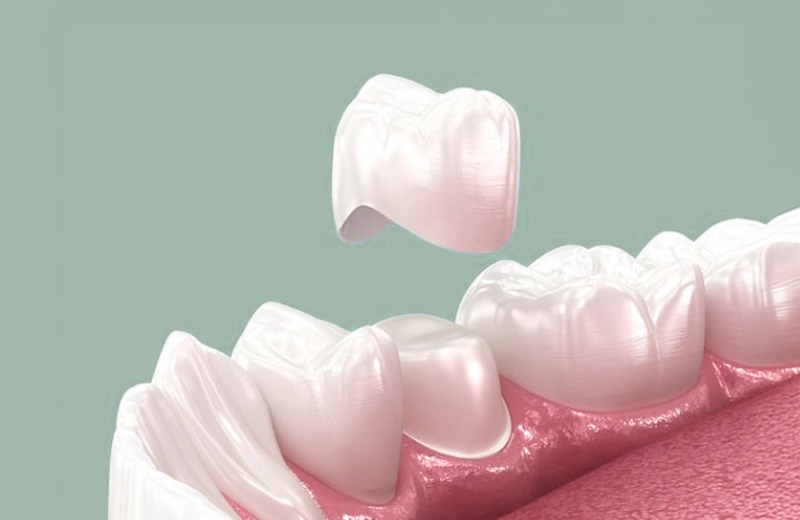
A dental crown—commonly known as a tooth cap—is a custom-engineered, full-coverage restoration that completely encases a compromised, damaged, or heavily treated tooth. When natural tooth structure is undermined by deep bacterial decay, hairline fracture lines, accidental trauma, or the loss of internal vascular hydration following root canal therapy, conventional dental fillings can no longer withstand regular biting forces. Chewing exerts substantial mechanical pressure on posterior molars and premolars; without full-coverage coronal protection, a compromised tooth remains vulnerable to vertical fractures that extend below the bone level, which often leaves extraction as the only remaining option.
At Tooth & Tonic, located in Block R, Greater Kailash-1, designing dental crowns and teeth caps centers on biological preservation, structural strength, and digital precision. We have eliminated outdated metal-fused crowns that cause dark gray lines along the gumline in favor of biocompatible, all-ceramic and monolithic zirconia restorations. Utilizing high-resolution 3D intraoral digital impressions and computerized CAD/CAM milling, our clinical team restores natural chewing mechanics, phonetics, and smile aesthetics with sub-millimeter marginal accuracy.
Advanced Restorative Materials for Teeth Caps at Our GK 1 Practice
Selecting the right restorative material ensures the proper balance between mechanical strength and natural enamel translucency. At our Greater Kailash 1 clinic, every dental crown is matched to your specific bite dynamics and cosmetic goals:
- Monolithic High-Translucency Zirconia: Milled from a solid block of biomedical-grade zirconium oxide, monolithic zirconia provides exceptional flexural and tensile strength. Because it has no external porcelain layer to chip or flake off, it withstands heavy chewing and nocturnal grinding forces, making it the premier choice for posterior molar caps while maintaining natural tooth shading.
- Lithium Disilicate (IPS E.max Ceramic): For anterior front teeth and visible premolars, IPS E.max glass-ceramic delivers lifelike aesthetics. It mirrors natural tooth enamel’s opalescence, light refraction, and subtle translucency, blending imperceptibly with neighboring teeth.
- Porcelain-Fused-to-Zirconia (PFZ): Combining the internal core strength of a computer-milled zirconia substructure with an outer layer of hand-layered cosmetic porcelain, PFZ crowns offer strong structural support alongside tailored shade customization.
- 100% Metal-Free & Biocompatible: Our ceramic teeth caps eliminate risks of metal allergies, galvanic currents, and unsightly dark margins at the gumline, keeping your periodontal tissues healthy and stable.
Digital Precision: Modern Technology for an Exact Fit
Poorly contoured teeth caps with open margins can trap bacterial plaque, causing micro-leakage and secondary decay underneath the restoration. Our Greater Kailash 1 practice utilizes an end-to-end digital restorative workflow:
- 3D Intraoral Optical Scanning: We eliminate messy, gag-inducing silicone impression putties. Our high-speed intraoral scanner captures thousands of optical data points per second, building a precise 3D digital model of your prepared tooth, neighboring contacts, and bite alignment in real time.
- Microscopic Tooth Preparation: Utilizing dental operating loupes and microscopes with coaxial LED illumination, our dentists refine tooth margins into smooth, conservative chamfers. This minimizes unnecessary reduction of sound enamel and dentin while providing adequate clearance for structural ceramic strength.
- CAD/CAM Computerized Milling: Every dental crown is digitally designed to match your individual occlusion, ensuring tight interproximal contacts to eliminate food impaction and replicating natural chewing grooves (fissures and cusps).
Schedule a Dental Crown Consultation in Greater Kailash 1
Reinforce weakened teeth, restore your chewing power, and protect your smile with precision dental crowns and teeth caps at Tooth & Tonic.
- Direct Call: 098216 54499
- WhatsApp Direct: Message Us on WhatsApp
- Clinic Address: R 98, Lower Ground Floor (LGF), Block R, Greater Kailash-1, New Delhi, Delhi 110048
- Convenient Access: Centrally located in Block R, Greater Kailash 1, minutes away from M-Block and N-Block markets, with reserved patient parking assistance and direct ground-level entry.
Step-by-Step Clinical Crown Workflow at Tooth & Tonic GK 1
- Diagnostic Evaluation & Radiographs: We assess the tooth’s root anatomy, periodontal ligament, and surrounding bone health using low-radiation digital RVG X-rays or in-house 3D CBCT imaging.
- Targeted Localized Numbing: Local anesthetic is gently administered to ensure the tooth, periodontal ligament, and adjacent gingival margins remain completely comfortable during tooth preparation.
- Conservative Tooth Shaping: Damaged enamel, existing decay, or old leaking fillings are removed. The remaining tooth structure is contoured with smooth, uniform margins under optical magnification.
- 3D Optical Digital Scan (No Putty): The prepared tooth and opposing dental arch are captured using our 3D optical scanner, recording your functional bite with digital accuracy.
- Aesthetic Temporary Cap Placement: While the permanent ceramic crown is milled in the laboratory, a custom-fitted tooth-colored temporary cap is seated to shield the tooth from temperature sensitivity and preserve chewing function.
- Try-In & Occlusal Calibration: Once fabricated, the permanent crown is checked chairside for shade matching, marginal seal integrity, contact tightness, and smooth bite balance.
- Adhesive Resin Cementation: Using high-strength, moisture-resistant resin bonding agents, the crown is permanently bonded to the tooth, establishing an airtight barrier against oral bacteria.
Clinical Indications: When Are Dental Crowns (Teeth Caps) Necessary?
Our dental clinicians in GK 1 recommend a full-coverage tooth cap when conservative fillings cannot restore structural stability:
- Following Root Canal Therapy: Non-vital teeth become brittle over time due to the loss of internal vascular moisture. A full-coverage cap encircles the tooth to prevent vertical fractures under heavy occlusal loads.
- Large, Failing Fillings: When dental decay or previous restorations replace more than 50% of the tooth’s natural width, the remaining tooth walls lack sufficient strength to chew without fracturing.
- Cracked Tooth Syndrome: Teeth with micro-cracks that cause sharp, transient pain when biting benefit from the splinting action of a crown, which redistributes biting forces evenly.
- Severe Attrition & Enamel Wear: Heavy nocturnal teeth grinding (bruxism) or severe acid erosion flattens chewing surfaces and collapses facial bite height, requiring crowns to rebuild proper vertical dimension.
- Restoring Dental Implants: A custom ceramic crown functions as the permanent, lifelike tooth unit secured atop an integrated dental implant fixture.
Caring for Your Dental Crowns & Teeth Caps
Although dental ceramics and zirconia are completely impervious to bacterial cavities, the underlying natural tooth margin where the cap meets the gumline remains vulnerable to plaque accumulation:
- Brush Along the Gumline: Clean twice daily using a soft-bristled manual or electric toothbrush and non-abrasive fluoride toothpaste.
- Clean Interdental Contacts Daily: Floss daily around the base of the crown, or use an interdental brush or water flosser to remove plaque from the restoration margins.
- Wear a Custom Night Guard: If you clench or grind your teeth during sleep, a protective occlusal guard prevents excessive bite forces from chipping opposing enamel or stressing restorations.
- Attend Routine Cleanings: Schedule professional scaling and polishing visits every six months at our Greater Kailash 1 practice to maintain gingival health and verify marginal seal integrity.
Frequently Asked Questions for Greater Kailash 1 (GK 1) Patients
What is the difference between a dental crown and a tooth cap?
There is no clinical difference. “Dental crown” is the technical term, while “tooth cap” is the common term used by patients. Both refer to a custom restoration that covers the entire visible portion of a tooth above the gumline to restore its form, strength, and function.
How long do modern teeth caps last?
High-grade monolithic zirconia and E.max ceramic crowns typically last between 10 to 15 years, and often much longer with diligent oral hygiene, regular cleanings, and night guard protection if grinding habits are present.
Is tooth preparation for a dental crown painful?
No. The procedure is performed under targeted local numbing that completely desensitizes the tooth and surrounding gums. You will feel minor mechanical vibrations as the tooth is shaped, but no sharp discomfort. Mild, transient gum tenderness around the margin over the following 24 to 48 hours resolves naturally.
Why choose metal-free zirconia or E.max caps over older PFM (metal) crowns?
Traditional Porcelain-Fused-to-Metal (PFM) crowns have an underlying dark metal coping. As gums naturally change with age, this metal often shows as an unappealing dark line at the gumline. Furthermore, porcelain can shear off metal under heavy chewing pressure. All-ceramic and zirconia crowns are tooth-colored throughout, exceptionally strong, biocompatible, and do not cause dark discoloration at the gums.
How many visits are needed to complete a crown at your GK 1 clinic?
Treatment is typically completed in two appointments. During the first visit (45 to 60 minutes), the tooth is prepared, digitally scanned, and protected with a temporary cap. The second visit (20 to 30 minutes), scheduled roughly 2 to 4 days later, involves verifying the fit and permanently bonding the final crown.
Is a crown always required after a root canal?
For back molars and premolars, a crown is essential because these teeth absorb heavy chewing forces, and an unprotected, root-treated tooth faces a high risk of fracturing. For front teeth with minimal structural loss, conservative composite bonding may occasionally be sufficient based on individual clinical evaluation.
What should I do if my temporary cap comes loose before my next visit?
Temporary caps are placed with temporary cement to allow easy removal during your final bonding visit. If a temporary cap loosens, call our GK 1 clinic at 098216 54499. Keep the temporary safe, avoid chewing on that side, and our clinicians will comfortably reseat it until your permanent restoration is ready.
Where is Tooth & Tonic located in Greater Kailash 1?
Tooth & Tonic is located at R 98, Lower Ground Floor (LGF), Block R, Greater Kailash-1, New Delhi 110048. The clinic is centrally situated in GK 1, just a short 3- to 5-minute drive from M-Block Market and N-Block Market. We routinely care for patients from nearby South Delhi areas including Greater Kailash 2 (GK2), Kailash Colony, East of Kailash, Chittaranjan Park (CR Park), Defence Colony, Pamposh Enclave, and Nehru Place. Reserved patient parking assistance is available on arrival.