Tooth Extraction & Wisdom Tooth Care in Greater Kailash 1 | Tooth & Tonic
Atraumatic Extractions, Surgical Wisdom Tooth Removal & Socket Preservation in GK 1
While modern dentistry prioritizes preserving natural dentition whenever biologically feasible, certain clinical situations make tooth extraction the most appropriate choice for overall oral health. Extensive bacterial decay undermining root structures, non-restorable vertical root fractures, advanced periodontal bone loss that compromises tooth stability, or severely impacted wisdom teeth can threaten adjacent teeth, trigger recurring infections, and damage surrounding jawbone.
At Tooth & Tonic, located in Block R, Greater Kailash-1, tooth removal is approached with an atraumatic, bone-preserving surgical philosophy. Rather than utilizing aggressive manual force that can fracture delicate alveolar bone plates, our dental clinicians and maxillofacial surgeons utilize micro-surgical instruments, precision sectioning, and piezosurgery. This gentle, tissue-preserving methodology minimizes soft-tissue disruption, protects critical jawbone volume for future restorative options (such as dental implants), and supports smooth post-operative healing.
Advanced Surgical Technology at Our GK 1 Practice
Precise anatomical planning reduces procedural complexity and post-extraction recovery time. Our Greater Kailash 1 clinic integrates in-house digital diagnostic and surgical systems:
- In-House 3D CBCT Radiography: Cone Beam Computed Tomography provides three-dimensional radiographic views of tooth roots and surrounding bone. For complex lower wisdom tooth extractions, this allows us to trace the exact millimeters of separation between root tips and the inferior alveolar nerve canal, preventing nerve compression. For upper molars, it maps the precise relationship with the maxillary sinus floor.
- Low-Dose Digital RVG X-Rays: High-resolution digital periapical sensors provide immediate chairside imaging to evaluate root curvature, number of roots, and surrounding bone density.
- Periotomes & Micro-Luxators: Ultra-thin, specialized hand instruments carefully sever the periodontal ligament fibers anchoring the tooth root to the bone socket, allowing gentle elevation with minimal stress on the surrounding alveolar ridge.
- Piezosurgery Ultrasonic Bone Surgery: For surgical extractions requiring minor bone removal, high-frequency ultrasonic micro-vibrations cut mineralized bone selectively while sparing delicate soft tissues, blood vessels, and nerves.
- Platelet-Rich Fibrin (PRF) & Socket Preservation: Following extraction, the preservation of socket volume is essential. We offer biocompatible bone grafting and autologous PRF matrices derived from a small sample of your own blood to accelerate tissue closure, reduce discomfort, and prevent bone collapse.
Types of Tooth Extractions Performed
- Simple (Routine) Extractions: Indicated for teeth fully erupted above the gumline that possess accessible crown structures. These are elevated and removed gently under localized numbing in a brief appointment.
- Surgical Extractions: Required when a tooth has fractured below the gingival margin, has severely curved or brittle roots, or has undergone past endodontic treatment that makes the remaining root structure fragile.
- Impacted Wisdom Tooth (Third Molar) Surgery: Wisdom teeth often lack adequate space in the dental arch to erupt normally, becoming trapped horizontally, vertically, or angularly within the jawbone (bony impaction) or under the gums (soft-tissue impaction). Our oral surgeons section the tooth into small fragments for controlled removal with minimal bone modification.
- Orthodontic Extractions: Planned removal of specific premolars in cases of severe dental crowding or bimaxillary protrusion, coordinated directly with your clear aligner or orthodontic braces plan to facilitate harmonious arch alignment.
Schedule a Surgical Consultation in Greater Kailash 1
Address damaged teeth, alleviate persistent impaction discomfort, and protect your jawbone with gentle atraumatic extractions at Tooth & Tonic.
- Direct Call: 098216 54499
- WhatsApp Direct: Message Us on WhatsApp
- Clinic Address: R 98, Lower Ground Floor (LGF), Block R, Greater Kailash-1, New Delhi, Delhi 110048
- Location Details: Centrally located in Block R, Greater Kailash 1, minutes away from M-Block and N-Block markets, with reserved patient parking assistance and direct ground-level access.
Step-by-Step Clinical Extraction Workflow at Tooth & Tonic GK 1
- Diagnostic Workup & 3D Imaging: We perform an intraoral evaluation and take digital radiographs or a 3D CBCT scan to evaluate root geometry, angulation, and proximity to adjacent anatomical structures.
- Targeted Localized Numbing: Local anesthetic agents are administered to completely desensitize the tooth, surrounding periodontal ligament, and adjacent gingival tissues, ensuring you remain comfortable throughout the appointment.
- Atraumatic Elevation: Using fine periotomes and luxators, the tooth root is gently mobilized within its socket by releasing the microscopic periodontal fibers.
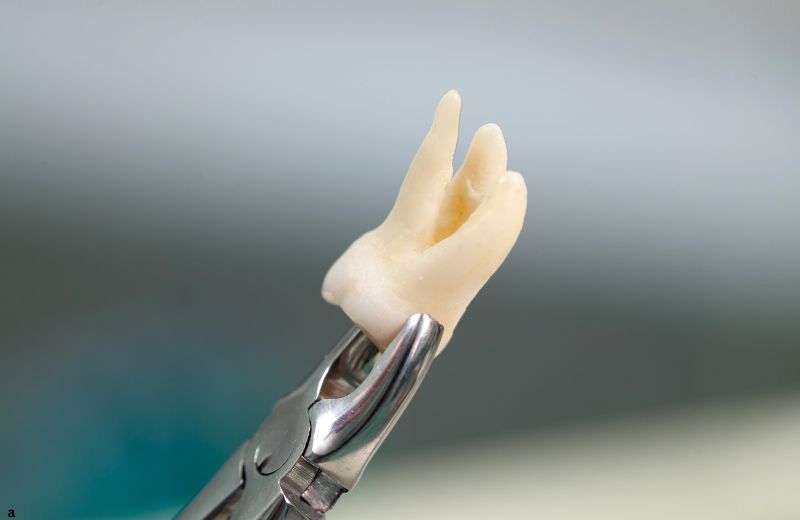
- Controlled Sectioning (When Indicated): For multi-rooted molars or impacted teeth, the tooth is carefully sectioned into individual fragments using specialized surgical handpieces, allowing each piece to exit cleanly without stretching or stressing the surrounding bone.
- Socket Debridement & Sanitization: The empty socket is gently curetted to remove chronic inflammatory tissue, cystic lining, or infected granulation tissue, followed by irrigation with sterile antimicrobial saline.
- Socket Preservation & PRF Placement (Optional): If a future dental implant is planned, a biocompatible bone graft or PRF membrane is placed into the socket to maintain alveolar ridge height and contour.
- Hemostatic Control & Resorbable Suturing: A sterile gauze pack is positioned over the extraction site to facilitate initial blood clot formation. When surgical incisions are made, fine biocompatible sutures are placed to support clean soft-tissue closure.
Understanding Wisdom Tooth Complications
Third molars (wisdom teeth) typically attempt to erupt between the ages of 17 and 25. Because modern jaw structures are often too compact to accommodate them, impacted wisdom teeth frequently trigger recurring clinical problems:
- Pericoronitis: A painful bacterial infection of the gum flap (operculum) overlying a partially erupted lower wisdom tooth, often causing difficulty opening the mouth (trismus), localized swelling, and bad breath.
- Damage to Adjacent Second Molars: Horizontal or mesially tilted wisdom teeth push directly against the roots or crowns of healthy adjacent molars, causing hidden cavities (resorption) that can compromise both teeth.
- Dentigerous Cysts: Fluid-filled sacs can form around the crowns of unerupted impacted teeth, gradually expanding and eroding the surrounding jawbone tissue.
- Crowding & Hygiene Obstacles: Wisdom teeth positioned at abnormal angles trap food particles and bacterial biofilm in areas that floss and toothbrushes cannot reach, increasing decay risks for the entire posterior quadrant.
Post-Operative Care: Protecting the Blood Clot & Avoiding Dry Socket
Following a tooth extraction, your body naturally forms a protective blood clot within the empty socket. This clot serves as a biological shield covering the underlying bone and nerve endings while new tissue forms. Dislodging this clot exposes bone to oral bacteria and air, leading to a condition known as alveolar osteitis (dry socket).
To ensure uneventful healing:
- Maintain Firm Gauze Pressure: Keep the sterile gauze pad firmly in place over the extraction site for 45 to 60 minutes after leaving our GK 1 clinic.
- No Spitting, Sucking, or Straws: Avoid drinking through a straw, vigorous rinsing, or forceful spitting for the first 48 hours. The negative pressure created in the mouth can easily dislodge the stabilizing clot.
- Soft, Cool Diet: Consume soft foods (such as yogurt, smoothies, lukewarm soups, soft rice, and mashed potatoes) for the first two to three days. Avoid extremely hot, spicy, or crunchy foods (like chips and nuts) that can irritate the surgical site.
- No Smoking or Tobacco: Avoid smoking, vaping, or using any tobacco products for at least 72 hours post-extraction, as nicotine and inhalation suction significantly impair tissue vascularization and heighten dry socket risks.
- Gentle Oral Hygiene: Continue brushing your other teeth normally, but avoid brushing directly over the extraction site for the first 24 hours. Starting on day two, gently rinse with warm salt water (half a teaspoon of salt in a glass of warm water) after meals to keep the area clean.
Frequently Asked Questions for Greater Kailash 1 (GK 1) Patients
Is tooth extraction comfortable at your GK 1 clinic?
Yes. Tooth removal is performed under targeted local numbing that completely blocks sensation in the surgical area. You will feel mechanical pressure as the tooth is gently loosened, but you will not feel sharp discomfort. Our clinicians check your comfort levels before and during the procedure.
How long does it take to recover from a wisdom tooth extraction?
Initial soft-tissue healing and reduction of swelling typically occur within 3 to 5 days. Most patients return to their routine desk work and normal daily activities within 24 to 48 hours. Complete bone remodeling within the socket continues naturally over a few months.
What should I do if I suspect a dry socket?
If you experience persistent, increasing throbbing discomfort around day 3 or 4 that radiates toward your ear or temple, accompanied by a bad taste in the mouth, your blood clot may have dislodged. Contact our GK 1 reception desk at 098216 54499 right away. Our team will gently irrigate the socket and apply a soothing, medicated dressing to relieve symptoms and support healing.
Can I replace an extracted tooth with a dental implant immediately?
In many cases, yes. If the extraction site is free from acute infection and has sufficient healthy bone around the socket walls, an immediate dental implant can often be placed during the same appointment, reducing total treatment time and preserving surrounding bone contours.
Do all four wisdom teeth need to be removed at the same time?
Not necessarily. If only one or two wisdom teeth are causing localized pain, infection, or damage to adjacent molars, we can treat just the problematic teeth.
Where is Tooth & Tonic located in Greater Kailash 1?
Tooth & Tonic is located at R 98, Lower Ground Floor (LGF), Block R, Greater Kailash-1, New Delhi 110048. Our clinic is centrally positioned in GK 1, just 3 to 5 minutes away from both M-Block Market and N-Block Market. We routinely care for patients from nearby South Delhi areas including Greater Kailash 2 (GK2), Kailash Colony, East of Kailash, Defence Colony, Chittaranjan Park (CR Park), Pamposh Enclave, and Nehru Place. Reserved patient parking and valet assistance are available on arrival.
How long does an extraction procedure take?
A routine simple extraction typically takes 20 to 30 minutes. A surgical or impacted wisdom tooth extraction usually takes between 45 and 60 minutes, which includes time for localized numbing, controlled sectioning, socket irrigation, and post-operative care instructions.