Precision Laser Dentistry in Greater Kailash 1 | Tooth & Tonic
Advanced Dental Diode Lasers, Minimally Invasive Soft-Tissue Care & Bacterial Decontamination in GK 1
Traditional dental procedures involving soft tissue have historically relied on surgical scalpels, electrosurgery units, and mechanical incisions. While effective, conventional surgical techniques often cause noticeable intraoperative bleeding, require sutures, and involve a protracted post-operative recovery period marked by localized swelling and tissue sensitivity.
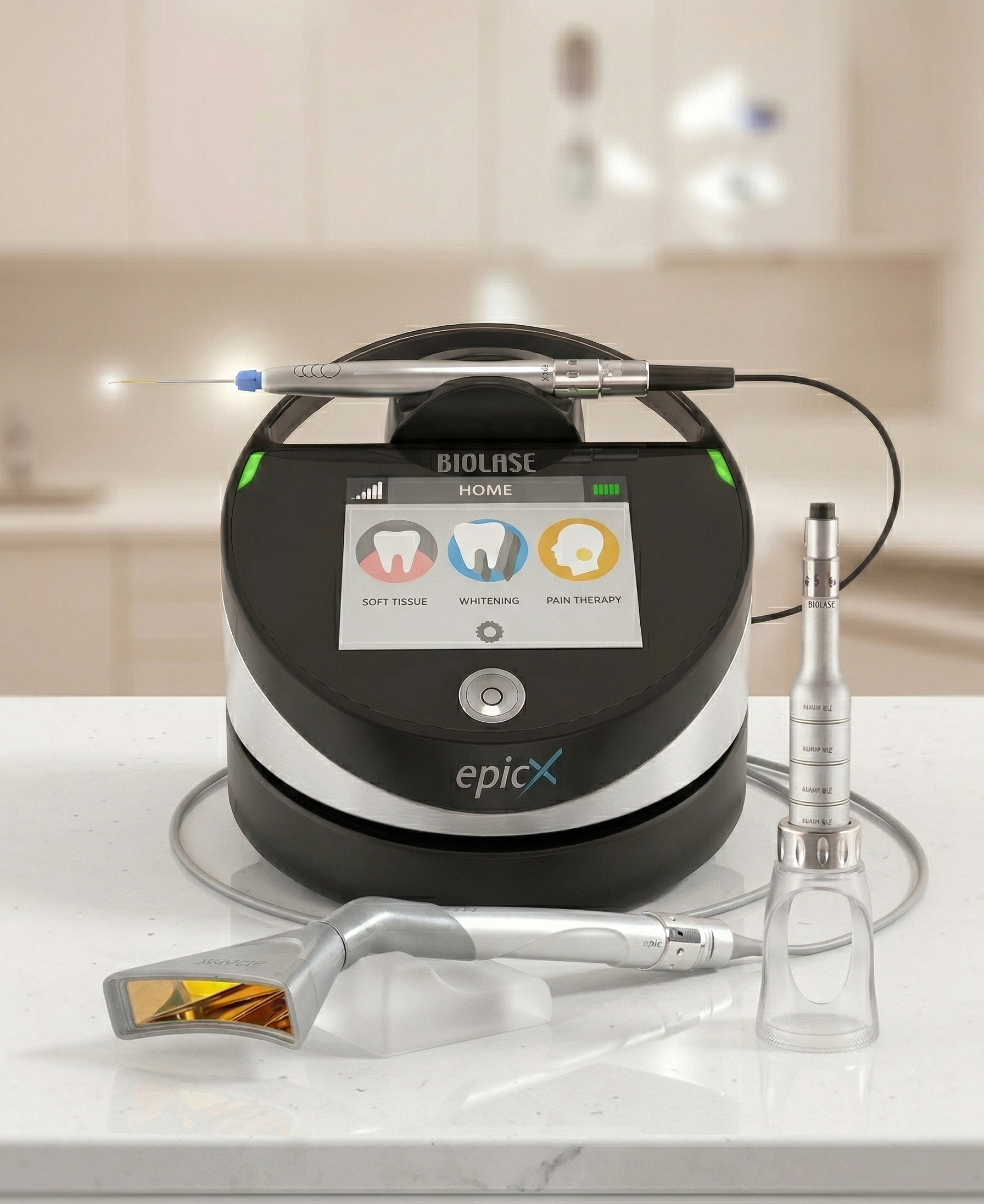
At Tooth & Tonic, located in Block R, Greater Kailash-1, laser dentistry represents a shift toward conservative, minimally invasive oral care. Utilizing specialized dental diode laser wavelengths, our clinic replaces mechanical cutting with targeted thermal photonic energy. Dental lasers interact selectively with soft tissue chromophores (water, hemoglobin, and melanin), allowing for ultra-precise contouring, excision, and decontamination while coagulating blood vessels and sealing lymphatic pathways simultaneously. This approach preserves healthy surrounding oral structures, minimizes tissue trauma, and supports smooth, accelerated healing.
Clinical Applications of Laser Dentistry at Our GK 1 Practice
Dental diode lasers provide versatile, high-precision utility across restorative, periodontal, surgical, and aesthetic disciplines:
- Aesthetic Gum Contouring (Gingivoplasty & Gingivectomy): For individuals with asymmetrical gingival margins, excessive gum display (“gummy smile”), or altered passive eruption, lasers sculpt the gumline with sub-millimeter precision. Because the laser cauterizes as it cuts, there are typically no open wounds or sutures, allowing for immediate aesthetic evaluation.
- Frenectomy & Tongue-Tie Release: An abnormal, tight labial frenum (causing gaps between front teeth) or lingual frenum (causing tongue-tie and speech impediments in children and adults) can be released in minutes. The laser vaporizes the restrictive fibrous band without mechanical tearing, bleeding, or the need for stitches.
- Periodontal Pocket Decontamination: In patients managing chronic gingivitis or periodontitis, laser energy is introduced into deep periodontal pockets. The laser light selectively targets and destroys pigmented anaerobic bacteria (such as P. gingivalis) and vaporizes diseased pocket lining without harming healthy connective tissue attachments.
- Operculectomy: Removing inflamed gum flaps (opercula) overlying partially erupted wisdom teeth or second molars, eliminating localized food traps and relieving recurrent pericoronitis infections.
- Low-Level Laser Therapy (Photobiomodulation) for Oral Ulcers: Direct application of low-intensity laser energy to painful aphthous ulcers (canker sores) or herpetic cold sores neutralizes nerve irritation, reduces localized discomfort, and speeds up epithelial closure.
- Implant Uncovery & Soft-Tissue Management: Exposing integrated dental implants prior to crown placement, or clearing overgrown gingival tissue around deep cavity margins to ensure a dry, clean field for composite bonding or digital optical scanning.
How Dental Diode Lasers Work: The Biological Mechanism
Laser is an acronym for Light Amplification by Stimulated Emission of Radiation. In a clinical dental setting, this coherent, monochromatic light delivers targeted biological benefits:
- Selective Photothermal Vaporization: Soft-tissue diode lasers operate at wavelengths (typically 810 nm to 980 nm) readily absorbed by hemoglobin and melanin. This allows our clinicians to vaporize problematic soft tissue cells smoothly without causing deep thermal necrosis in the underlying bone or tooth structure.
- Instant Hemostasis (Bloodless Field): The heat generated by the laser seals micro-capillaries instantly as it passes through tissue. This provides a clear, dry surgical field, drastically reducing procedure time and eliminating the need for bulky surgical dressings.
- Sterilization of Surgical Margins: High localized thermal energy eradicates bacteria and viral pathogens within the surgical zone, minimizing the risk of secondary infections and bacteremia.
- Sealing of Nerve Endings & Lymphatics: By photothermally sealing severed nerve endings and lymphatic vessels, lasers significantly reduce post-operative inflammation, fluid accumulation, and localized soreness.
Schedule a Laser Consultation in Greater Kailash 1
Experience modern, comfortable, and minimally invasive soft-tissue care with precision laser dentistry at Tooth & Tonic.
- Direct Call: 098216 54499
- WhatsApp Inquiries: Connect via WhatsApp
- Clinic Address: R 98, Lower Ground Floor (LGF), Block R, Greater Kailash-1, New Delhi, Delhi 110048
- Convenient Access: Located in Block R, Greater Kailash 1, minutes away from M-Block and N-Block markets, with reserved patient parking assistance and direct ground-level access.
Step-by-Step Laser Procedure at Tooth & Tonic GK 1
- Clinical Assessment & Diagnostic Review: We examine the targeted soft tissue, assess periodontal measurements, and take digital radiographs to evaluate underlying bone structures.
- Safety Protocol & Eye Protection: Laser safety is strictly maintained. Both the patient and clinical team wear specialized, wavelength-filtering protective eyewear throughout the procedure.
- Targeted Local Anesthesia: Because lasers interact gently with tissue, minor procedures often require only a mild topical numbing gel. For deeper soft-tissue recontouring, a small amount of localized anesthetic ensures complete comfort.
- Laser Calibration & Fiber Cleaving: The dental diode laser is calibrated to the precise power output (wattage) and pulse mode (continuous or gated) indicated for your specific tissue density and treatment goals.
- Precision Photothermal Treatment: The optical fiber tip gently traces the planned gingival contours, releases fibrous attachments, or cleanses periodontal pockets, working with optical magnification under LED illumination.
- Saline Lavage & Evaluation: The treated site is rinsed with sterile saline to remove cellular debris, allowing immediate verification of gingival symmetry and tissue seal.
- Post-Care Guidance: Because sutures are rarely required, post-treatment care is simple, and patients can immediately resume normal, non-strenuous daily activities.
Laser Dentistry vs. Traditional Scalpel Surgery
Clinical Feature | Diode Laser Surgery (Tooth & Tonic GK 1) | Conventional Scalpel Surgery |
Bleeding Control | Instant coagulation; virtually bloodless field | Frequent bleeding; requires continuous suction |
Suture Requirement | Rarely requires stitches | Frequently requires surgical sutures |
Infection Risk | Thermal energy sterilizes the site as it cuts | Open surgical wound susceptible to oral bacteria |
Post-Operative Swelling | Minimal swelling; lymphatics are sealed | Common post-surgical edema and bruising |
Anesthetic Requirement | Minimal; often accomplished with topical gels | Requires infiltration or block local anesthesia |
Healing Duration | Rapid epithelialization and tissue recovery | Extended healing time; suture removal needed |
Post-Procedure Care Following Laser Treatment
Soft tissue treated with dental lasers heals rapidly, but following simple care guidelines ensures optimal recovery:
- Gentle Oral Hygiene: Continue brushing and flossing adjacent teeth normally, but avoid aggressive scrubbing directly over the lasered gumline for the first 48 hours.
- Dietary Choices: Avoid sharp, crunchy foods (such as chips and nuts) as well as heavily spiced or highly acidic dishes for 2 to 3 days to avoid irritating delicate healing tissues.
- Warm Salt-Water Rinses: Beginning 24 hours after treatment, gently rinse with warm salt water (half a teaspoon of salt in a glass of warm water) after meals to keep the area clean.
- Avoid Tobacco Products: Refrain from smoking, vaping, or chewing tobacco for at least 72 hours, as nicotine constricts blood vessels and delays natural tissue repair.
Frequently Asked Questions for Greater Kailash 1 (GK 1) Patients
Is laser dentistry comfortable?
Yes. Laser procedures are designed to be gentle on soft tissues. Because the laser tip seals nerve endings and blood vessels instantaneously, patients feel minimal sensation during the procedure. For minor treatments like aphthous ulcer therapy, only a topical numbing gel is needed; for soft-tissue excisions, light localized numbing ensures complete comfort.
Do laser gum treatments require stitches (sutures)?
In the vast majority of soft-tissue laser procedures—such as gingivectomies, frenectomies, and operculectomies—no sutures are required. The laser naturally coagulates the tissue margins as it works, creating a sealed, clean border that heals naturally without stitches.
How long does it take for gums to heal after laser treatment?
Initial tissue stabilization occurs within 24 to 48 hours. Because thermal trauma is minimal and tissues are disinfected during the procedure, complete epithelial healing is typically achieved in 5 to 7 days—significantly faster than traditional scalpel incisions.
Can dental lasers treat severe gum disease (periodontitis)?
Yes. Lasers are highly effective in periodontal therapy. When introduced into infected gum pockets alongside ultrasonic scaling, the laser energy targets and eliminates deep subgingival bacteria and diseased tissue, promoting healthy gum reattachment to tooth roots.
Can children receive laser treatments like frenectomies at your GK1 clinic?
Yes. Laser frenectomies are ideal for pediatric patients. The procedure is completed in just a few minutes, avoids scary surgical instruments, causes minimal bleeding, and requires no stitches, making it a stress-free experience for both child and parent.
Where is Tooth & Tonic located in Greater Kailash 1?
Tooth & Tonic is located at R 98, Lower Ground Floor (LGF), Block R, Greater Kailash-1, New Delhi 110048. Centrally positioned in GK 1, the clinic is a short 3- to 5-minute drive from M-Block Market and N-Block Market. We routinely care for patients from nearby South Delhi areas including Greater Kailash 2 (GK2), Kailash Colony, East of Kailash, Chittaranjan Park (CR Park), Pamposh Enclave, and Nehru Place. Reserved patient parking and valet assistance are available on arrival.
Is laser dentistry safe for teeth and existing dental restorations?
Yes. Soft-tissue diode lasers operate at wavelengths specifically absorbed by soft tissue pigments (hemoglobin and melanin) rather than hard tooth enamel, porcelain, or titanium implants. This makes lasers exceptionally safe for working around dental crowns, veneers, and implants without risking structural damage.