Advanced Gum & Bone Treatments in Greater Kailash 1 | Tooth & Tonic
Specialized Periodontal Care, Bone Grafting, Deep Root Planing & Tissue Regeneration in GK 1
The long-term survival of your natural teeth depends entirely on the health of the periodontium—the biological foundation composed of gingival tissue (gums), periodontal ligaments, cementum, and alveolar jawbone. When dental plaque and calcified tartar (calculus) accumulate along and beneath the gumline, pathogenic anaerobic bacteria release harmful endotoxins. This triggers a chronic immune response that advances from mild gingival swelling (gingivitis) to irreversible destruction of the connective fibers and supporting alveolar bone (periodontitis).
Left unmanaged, periodontal disease leads to deepened gum pockets, receding gumlines, root exposure, persistent bad breath, and progressive tooth mobility, eventually resulting in premature tooth loss. Furthermore, chronic periodontal inflammation is clinically linked to systemic health concerns, including cardiovascular disease, poor glycemic control in diabetes, and respiratory complications.
At Tooth & Tonic, located in Block R, Greater Kailash-1, our periodontal and regenerative practice focuses on biological preservation and bone stabilization. Combining digital 3D bone diagnostics, piezoelectric micro-instrumentation, targeted dental lasers, and advanced bone-grafting techniques, we stop disease progression, clear subgingival bacterial reservoirs, and regenerate lost structural bone support around natural teeth and dental implants.
Comprehensive Gum & Bone Therapies at Our GK 1 Practice
Our Greater Kailash 1 clinic provides an integrated spectrum of non-surgical, laser-assisted, and regenerative surgical periodontal treatments:
- Deep Scaling & Root Planing (SRP): The foundational non-surgical therapy for active periodontitis. Under optical magnification, specialized ultrasonic tips and fine micro-curettes clean beneath the gumline, removing subgingival calculus and smoothing bacterial endotoxins from contaminated root surfaces to encourage gum reattachment.
- Laser-Assisted Periodontal Pocket Decontamination: Using targeted dental diode laser wavelengths, we decontaminate deep periodontal pockets. The laser light selectively eliminates pigmented anaerobic pathogens (such as Porphyromonas gingivalis) and removes diseased pocket lining without cutting into healthy connective tissue.
- Bone Grafting & Guided Tissue Regeneration (GTR): When periodontal disease creates angular bone defects or vertical bone loss around tooth roots, regenerative procedures are indicated. Biocompatible bone graft mineral matrices (allografts or xenografts) paired with resorbable collagen barrier membranes are placed to stimulate your body’s natural osteoblasts, rebuilding lost jawbone volume.
- Platelet-Rich Fibrin (PRF) Therapy: An autologous healing matrix prepared chairside from a small sample of your own blood. Rich in growth factors, platelets, and white blood cells, PRF membranes accelerate soft-tissue wound closure, stimulate localized vascular growth, and improve the predictability of bone regeneration.
- Connective Tissue & Gum Recession Grafting: For teeth exhibiting receding gums, root exposure, or thin gingival tissue, micro-surgical grafting restores a healthy band of attached gingiva. This protects sensitive root surfaces from decay, prevents further bone recession, and restores symmetric gum levels.
- Functional & Aesthetic Crown Lengthening: Reshaping excessive gum tissue and underlying bone margins using micro-instruments or dental lasers. This exposes healthy tooth structure to support a stable crown placement, or to correct uneven gumlines across the smile zone.
- Peri-Implantitis Therapy: Specialized decontamination protocols for inflamed tissues and bone loss around dental implants, utilizing implant-safe titanium instruments, air-polishing powders, and antimicrobial laser therapy to halt bone loss and preserve implant fixtures.
Diagnostic Precision: 3D Imaging & Periodontal Mapping
Accurate treatment planning depends on meticulous structural evaluation. Our Greater Kailash 1 clinic integrates in-house digital diagnostic systems:
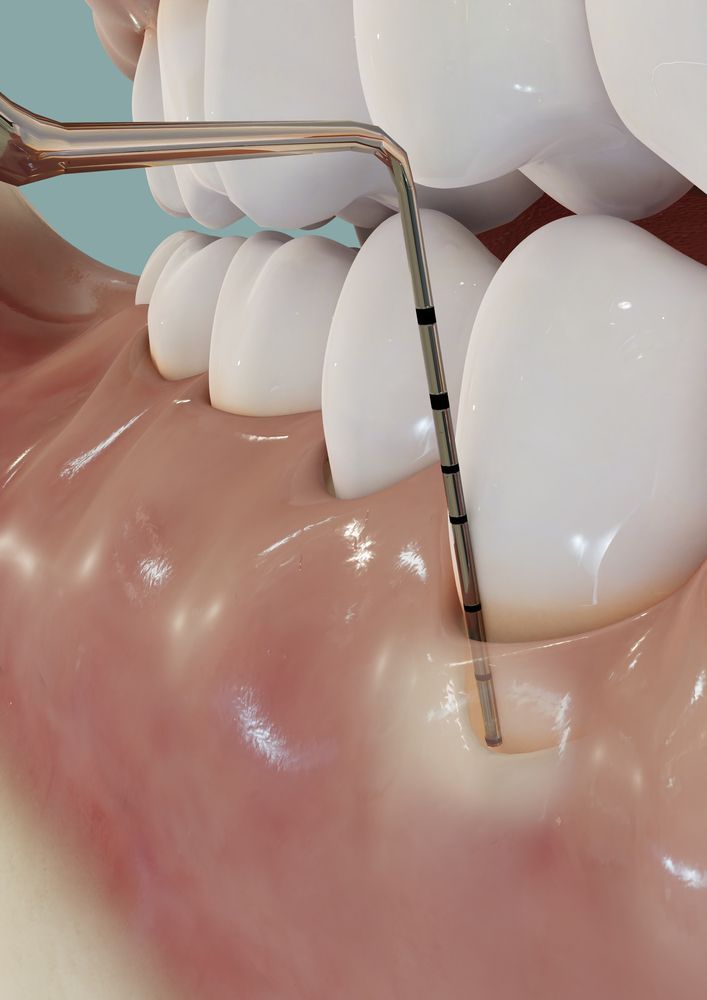
- 6-Point Periodontal Pocket Charting: Using a calibrated periodontal probe, our clinicians measure sulcular depth at six distinct points around every single tooth (1–3 mm indicates health; 4 mm or greater indicates active pocket formation requiring clinical intervention).
- 3D CBCT Volumetric Radiography: Low-radiation Cone Beam Computed Tomography provides three-dimensional views of the alveolar bone. Unlike conventional 2D flat X-rays, 3D CBCT reveals precise cratering, furcation involvement (bone loss between root branches), and the exact remaining bone height around each tooth.
- Digital RVG Intraoral Radiographs: High-resolution digital periapical sensors evaluate root canal margins, interproximal bone levels, and subgingival calculus spurs chairside.
Schedule a Gum & Bone Consultation in Greater Kailash 1
Stabilize loose teeth, halt gum bleeding, and restore jawbone support with specialized periodontal care at Tooth & Tonic.
- Direct Call: 098216 54499
- WhatsApp Direct: Message Us on WhatsApp
- Clinic Address: R 98, Lower Ground Floor (LGF), Block R, Greater Kailash-1, New Delhi, Delhi 110048
- Location Details: Centrally situated in Block R, Greater Kailash 1, minutes away from M-Block and N-Block markets, featuring reserved parking assistance and direct ground-level access.
Step-by-Step Clinical Periodontal Protocol at Tooth & Tonic GK 1
- Periodontal Examination & Risk Profiling: We complete full-mouth periodontal charting, evaluate tooth mobility, assess plaque index scores, and review systemic health factors (such as diabetes or cardiovascular conditions) that influence healing.
- Comfort Anesthesia: Targeted local numbing is gently administered to desensitize the gums, periodontal pockets, and tooth roots, ensuring a relaxed, comfortable appointment.
- Ultrasonic Debridement & Root Planing: Piezoceramic scalers break down hardened subgingival calculus. Specialized Gracey curettes smooth rough root cementum to create clean surfaces for gum reattachment.
- Laser Pocket Decontamination & Sulcular Irrigation: An optical laser fiber is swept through infected pockets to neutralize residual bacteria, followed by irrigation with antimicrobial solutions.
- Regenerative Bone Placement (When Indicated): For sites with vertical bone destruction, the pocket is accessed under optical magnification, cleared of granulation tissue, and filled with a biocompatible bone matrix covered by a PRF or collagen barrier membrane.
- Microsurgical Suturing: Fine, biocompatible sutures secure the gum margins snugly around the tooth necks to support rapid primary healing.
- Supportive Periodontal Maintenance (SPT): Because periodontitis is a chronic condition, patients enter a customized maintenance recall program (every 3 to 4 months) to track pocket reduction, prevent bacterial recolonization, and protect regenerative results.
Comparing Periodontal Stages: Gingivitis vs. Periodontitis
Clinical Factor | Healthy Gums | Gingivitis (Early Stage) | Periodontitis (Advanced Stage) |
Pocket Depth | 1 to 3 mm | 2 to 4 mm (pseudo-pockets) | 4 to 9+ mm (deep pathological pockets) |
Gingival Appearance | Pale pink, firm, stippled | Red, puffy, swollen margins | Dusky red/purple, receding, detached |
Bleeding on Probing | None | Common during brushing/flossing | Frequent bleeding, occasional suppuration (pus) |
Bone Loss | No bone loss | No alveolar bone loss | Irreversible loss of supporting jawbone |
Tooth Stability | Firm, normal physiological give | Firm | Mobile, drifting, or loose teeth |
Reversibility | Healthy baseline | 100% reversible with cleaning | Irreversible; manageable with therapy |
Warning Signs of Periodontal & Bone Breakdown
Gum disease develops quietly, often without acute discomfort until substantial structural bone has been lost. You should schedule an evaluation at our GK1 center if you notice:
- Bleeding Gums: Pink foam when spitting out toothpaste or blood spots on dental floss. Healthy gum tissue does not bleed during normal brushing.
- Chronic Halitosis (Bad Breath): A persistent foul taste or breath odor produced by volatile sulfur compounds from anaerobic bacteria living in deep pockets.
- Gum Recession (Longer-Looking Teeth): Gums pulling downward on lower teeth or upward on upper teeth, exposing darker, yellowish root surfaces that are sensitive to hot and cold.
- Shifting Teeth or New Gaps: Teeth tilting, rotating, or developing spaces between them where food continuously gets trapped.
- Loose or Mobile Teeth: Teeth that move slightly when chewing firm foods or when touched with the tongue.
- Dull Aching or Chewing Discomfort: A deep, localized ache within the jawbone or gums during mastication.
Long-Term Periodontal Maintenance
Achieving periodontal stability is a collaborative effort between clinical therapy and consistent home care:
- Brush Twice Daily Along the Gumline: Use a soft-bristled toothbrush angled at 45 degrees toward the gum sulcus (Modified Bass technique) with non-abrasive fluoride toothpaste.
- Interdental Cleaning: Clean between teeth daily using appropriately sized interdental brushes, superfloss, or an oral irrigator (water flosser) to clear subgingival plaque where bristles cannot reach.
- Avoid Smoking & Tobacco Products: Tobacco use restricts micro-capillary blood flow in the gums, hides classic bleeding signs, and substantially increases the rate of bone loss.
- Manage Systemic Health: Maintaining healthy blood sugar levels is essential, as elevated glucose levels impair collagen repair and exacerbate periodontal bone resorption.
- Maintain Routine Maintenance Visits: Attend scheduled 3- to 4-month periodontal maintenance visits at our Greater Kailash 1 practice to monitor pocket stability and clear new bacterial deposits before they calcify.
Frequently Asked Questions for Greater Kailash 1 (GK 1) Patients
Can lost jawbone grow back around teeth?
Horizontal bone loss across multiple teeth is challenging to rebuild, but vertical, crater-like angular bone defects can often be regenerated using Guided Tissue Regeneration (GTR), bone grafting materials, and PRF membranes. Even when complete bone height cannot be restored, periodontal treatment stops further bone loss, tightens surrounding gum tissue, and stabilizes the natural tooth.
Is deep scaling and root planing comfortable?
Yes. Deep cleaning is performed using targeted local numbing that completely desensitizes the gum tissues and tooth roots. You will feel minor vibration and cool water flow from the ultrasonic instruments, but the procedure is designed to keep you relaxed and comfortable throughout.
How does a bone graft work around a natural tooth?
The infected area is thoroughly cleaned to remove bacteria and granulation tissue. A biocompatible bone graft material—serving as a mineral scaffold—is placed into the defect and covered with a protective barrier membrane. Over the following 4 to 9 months, your body’s osteoblasts populate this scaffold, gradually replacing the graft with natural, living bone.
What is the difference between a routine cleaning and deep root planing?
A routine cleaning (scaling and polishing) focuses on visible tooth surfaces above the gums and just below the gum margin for patients with healthy gums or mild gingivitis. Deep root planing is a targeted periodontal treatment that reaches several millimeters beneath the gumline to clean contaminated root surfaces and eliminate deep bacterial colonies within infected pockets.
Can gum disease cause teeth to become loose?
Yes. Periodontal disease gradually destroys the alveolar bone and periodontal ligament fibers holding tooth roots in place. As supporting bone resorbs, teeth lose their stability and begin to shift or loosen. Controlling the infection allows surrounding tissues to tighten and firm up around the roots.
Where is Tooth & Tonic located in Greater Kailash 1
Tooth & Tonic is located at R 98, Lower Ground Floor (LGF), Block R, Greater Kailash-1, New Delhi 110048. Centrally positioned in GK 1, the clinic is a short 3- to 5-minute drive from M-Block Market and N-Block Market. We routinely care for patients from nearby South Delhi areas including Greater Kailash 2 (GK2), Kailash Colony, East of Kailash, Chittaranjan Park (CR Park), Defence Colony, Pamposh Enclave, and Nehru Place. Reserved patient parking and valet assistance are available on arrival.
How long does a deep gum treatment appointment take?
Depending on the severity of pocketing, deep scaling and root planing is typically completed in one or two visits of 45 to 60 minutes each, often treating one or two quadrants per session to ensure thorough debridement and patient comfort.