TMJ & Jaw Joint Disorder Treatments in Greater Kailash 1 | Tooth & Tonic
Comprehensive Temporomandibular Joint (TMD) Therapy, Occlusal Splints, Bite Balancing & Bruxism Care in GK 1
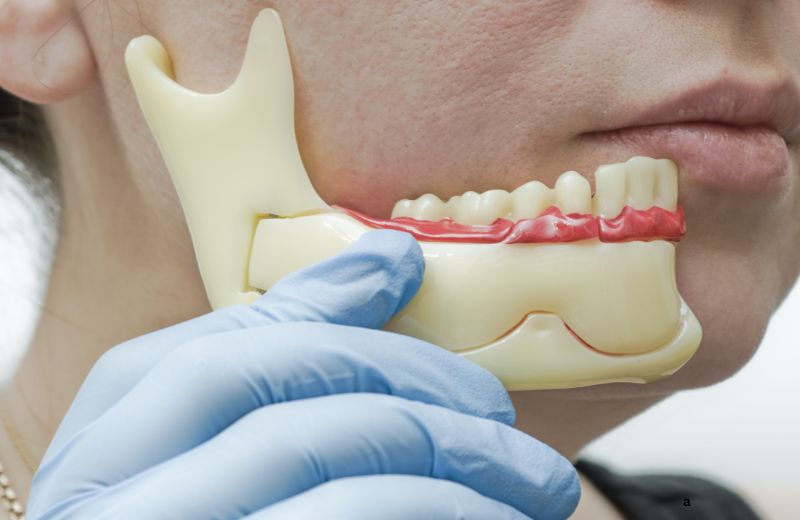
The temporomandibular joints (TMJ) connect your lower jaw (mandible) to the temporal bones of your skull on either side of your head. Functioning as a bi-directional hinge-and-glide mechanism, the TMJ works in tandem with a network of facial muscles, ligaments, and a fibrocartilaginous articular disc to facilitate smooth chewing, swallowing, speaking, and yawning. When structural alignment, joint mechanics, or biting forces fall out of balance, the resulting condition is clinically classified as Temporomandibular Disorder (TMD).
TMD often manifests quietly before escalating into chronic discomfort: morning jaw stiffness, audible clicking or popping sounds while chewing, reduced mouth opening, ear fullness, and persistent tension headaches radiating across the temples, neck, and shoulders. Chronic nocturnal bruxism (unconscious teeth clenching and grinding during sleep) places extreme compressive mechanical loads on both the joint complex and the dentition, accelerating enamel attrition, micro-fracturing restorations, and causing muscle spasms.
At Tooth & Tonic, located in Block R, Greater Kailash-1, our approach to TMJ dysfunction and jaw pain centers on non-invasive, neuromuscular diagnostics and conservative joint decompression. We identify the root biomechanical and occlusal triggers responsible for joint strain, delivering tailored therapies that alleviate muscle hyperactivity, stabilize joint posture, and protect your teeth from long-term wear.
Advanced TMJ Diagnostics at Our Greater Kailash 1 Practice
Effective joint therapy begins with precise structural and occlusal evaluation. Our GK 1 facility utilizes in-house digital diagnostic technologies to evaluate joint anatomy and bite dynamics:
- 3D CBCT Condylar Imaging: Low-radiation Cone Beam Computed Tomography (CBCT) provides high-resolution, three-dimensional views of the mandibular condyle, glenoid fossa, and articular eminence. This allows our clinicians to detect bony remodeling, condylar flattening, joint space narrowing, and degenerative changes (osteoarthritis) with sub-millimeter precision.
- Digital Occlusal Analysis & Bite Mapping: We analyze dynamic contact forces between your upper and lower dental arches. Identifying microscopic premature contacts or lateral interferences that force the jaw to shift awkwardly helps us understand muscular compensation patterns.
- Joint Range-of-Motion & Joint Sound Profiling: We measure maximal incisal opening (normal range: 40–50 mm), lateral excursions, and mandibular deviation during opening and closing, recording whether clicks represent reducible disc displacement.
- Myofascial Palpation: Systematic clinical examination of the masticatory muscle chain—including the masseter, temporalis, medial pterygoid, and cervical neck stabilizers—helps pinpoint localized trigger points and muscular hypertonicity.
Comprehensive TMJ & Jaw Treatment Modalities
Depending on the underlying diagnosis—whether purely muscular (myofascial pain dysfunction) or structural (internal disc derangement)—our Greater Kailash 1 team designs a targeted, phased treatment plan:
- Custom Neuromuscular Occlusal Splints (Michigan Splints): Fabricated from rigid, high-density medical acrylic, our custom splints fit over the upper or lower arch. Unlike soft store-bought guards that often encourage clenching, a hard stabilization splint provides precise, flat contact zones that allow the jaw muscles to relax (deprogram) and the condyles to seat naturally in a neutral, relaxed position.
- Targeted Muscle Relaxation Therapies: For patients experiencing acute spasms in the masseter and temporalis muscles, targeted therapeutic injections can be administered into overactive trigger points. This temporarily relieves chronic muscle contraction, easing joint strain and facial tension without altering facial expressions.
- Occlusal Equilibration & Bite Adjustment: When minor tooth interferences trigger involuntary jaw shifting, microscopic polishing of specific non-functional enamel contact points redistributes bite forces evenly, eliminating joint-straining collisions.
- Restorative Full-Mouth Occlusal Rehabilitation: In advanced cases where chronic grinding or severe tooth loss has collapsed vertical bite height, conservative ceramic overlays, crowns, or onlays are designed to rebuild proper jaw posture and decompress the TMJ.
- Laser Biostimulation & Soft-Tissue Decompression: Low-level dental diode laser therapy can be directed at the peri-articular tissues to improve localized microcirculation, reduce inflammation, and support tissue healing around the joint capsule.
Schedule a TMJ & Jaw Consultation in Greater Kailash 1
Address jaw clicking, tension headaches, and teeth grinding with specialized TMJ care at Tooth & Tonic.
- Direct Call: 098216 54499
- WhatsApp Direct: Message Us on WhatsApp
- Clinic Address: R 98, Lower Ground Floor (LGF), Block R, Greater Kailash-1, New Delhi, Delhi 110048
- Location Details: Centrally situated in Block R, GK 1, just 3 to 5 minutes from M-Block and N-Block markets, featuring reserved parking assistance and direct ground-level access.
Step-by-Step Clinical Protocol at Tooth & Tonic GK 1
- Comprehensive History & Symptom Profiling: We document the frequency, intensity, and timing of your symptoms, reviewing past trauma, sleep quality, stress levels, and dental history.
- Clinical Muscle & Joint Examination: Our clinician evaluates joint sounds (clicking, popping, or crepitus), palpates head and neck musculature for tender trigger points, and measures jaw opening range and deviation.
- 3D Digital Diagnostics: Digital intraoral scans and in-house 3D CBCT scans are captured to visualize the exact spatial orientation of the condyles within the joint sockets.
- Computer-Guided Appliance Design: Using 3D optical scans, our dental laboratory fabricates an individualized, precision-milled hard stabilization splint calibrated to your specific neuromuscular jaw resting position.
- Chairside Fitting & Occlusal Balancing: The splint is carefully fitted and adjusted chairside using ultra-fine articulating film to confirm balanced, bilateral contact points and free lateral movement.
- Progress Tracking & Periodic Recalibration: Follow-up visits are scheduled at our GK 1 clinic to evaluate changes in muscle tone, verify joint comfort, and make fine adjustments to the splint surface as your jaw muscles deprogram and relax over time.
Common Signs You May Have a TMJ Disorder
Many individuals live with TMD symptoms without connecting them to jaw mechanics:
- Jaw Clicking, Popping, or Grating Sounds: Audible snapping or clicking during chewing, yawning, or wide opening, indicating the internal articular disc is slipping in and out of place.
- Morning Facial Fatigue & Jaw Stiffness: Waking up with sore jaw muscles, a tired feeling around the cheeks, or difficulty opening the mouth wide upon waking.
- Unexplained Chronic Headaches & Ear Fullness: Tension headaches localized around the temples, behind the eyes, or near the base of the skull, frequently accompanied by a feeling of pressure, stuffiness, or ringing in the ears (tinnitus).
- Jaw Catching or Locking: The lower jaw momentarily catching, sticking, or locking in an open or closed position.
- Flattened, Chipped, or Sensitive Teeth: Noticeable shortening of front teeth, worn-down enamel on molars, or unexplained sensitivity along the gumline caused by severe nocturnal clenching.
Custom Hard Occlusal Splints vs. Over-The-Counter Night Guards
Feature | Custom Clinic-Milled Splint (Tooth & Tonic GK 1) | Over-The-Counter (Boil-and-Bite) Guard |
Material Composition | Rigid, medical-grade clear acrylic or composite | Soft, spongy thermoplastic rubber or silicone |
Neuromuscular Effect | Deprograms muscles; encourages jaw relaxation | Triggers a “chew-toy” reflex that can increase clenching |
Bite Calibration | Balanced chairside to equalize occlusal forces | Generic shape; uneven contacts can shift your bite |
Joint Decompression | Engineered to provide space within the TMJ | Can wedge the joint, potentially worsening displacement |
Durability & Longevity | Built to resist heavy grinding for years | Wears through, shreds, or warps within months |
Helpful Home Care Practices for Acute Jaw Strain
Alongside professional clinical management, simple daily habits can help reduce acute joint tension:
- Maintain a Soft Diet: Opt for softer, easy-to-chew foods (soups, steamed vegetables, eggs, smoothies) during flare-ups. Avoid tough meats, hard crusts, and sticky candies.
- Eliminate Chewing Gum: Chewing gum places continuous, repetitive mechanical stress on the masticatory muscles and joint discs.
- Adopt the Resting Jaw Posture: Keep your “lips together, teeth apart.” In a resting state, natural teeth should never be touching; conscious awareness helps break daytime clenching habits.
- Warm Compresses: Applying a warm, moist towel to the sides of your face for 10 to 15 minutes in the evening helps soothe tight masseter muscles.
- Avoid Extreme Jaw Opening: Limit wide mouth movements during yawning, singing, or laughing by gently supporting the chin with your hand.
Frequently Asked Questions for Greater Kailash 1 (GK 1) Patients
What causes TMJ disorders and jaw clicking?
TMD can stem from a variety of overlapping factors, including stress-related teeth grinding (bruxism), uneven bite alignment, past jaw or whiplash trauma, joint disc displacement, or systemic inflammatory conditions like arthritis.
Can TMJ issues trigger chronic tension headaches and neck stiffness?
Yes. The temporalis and masseter muscles connect directly to cervical neck muscles and share shared nerve pathways (the trigeminal nerve complex). Muscle fatigue and spasms in the jaw frequently radiate upward into the temples and downward into the neck and upper shoulders.
How does a hard acrylic splint help my jaw?
A custom-milled hard stabilization splint provides a smooth, balanced surface for your opposing teeth. By preventing the intercuspation of teeth that locks the bite, it allows overworked masticatory muscles to relax and enables the condyle to rest without compression on sensitive joint tissues.
Why are soft, store-bought night guards not recommended for TMJ pain?
Soft, flexible boil-and-bite mouthguards often exacerbate the problem. The brain often treats soft rubber in the mouth like food, triggering an involuntary chewing and clenching reflex during sleep. This increases nocturnal muscle activity and can worsen joint strain.
Do I have to wear a TMJ splint permanently?
In many cases, an occlusal splint is worn primarily at night while sleeping. For some patients, wearing the appliance for a prescribed period allows muscles to deprogram and joint inflammation to settle, after which wear can be tapered. Other patients with chronic nocturnal bruxism continue nightly wear to protect their natural teeth and restorations from long-term damage.
Where is Tooth & Tonic located in Greater Kailash 1?
Tooth & Tonic is situated at R 98, Lower Ground Floor (LGF), Block R, Greater Kailash-1, New Delhi 110048. Centrally located in GK 1, the clinic is a short 3- to 5-minute drive from M-Block Market and N-Block Market. We routinely care for patients from nearby South Delhi areas including Greater Kailash 2 (GK2), Kailash Colony, East of Kailash, Chittaranjan Park (CR Park), Pamposh Enclave, and Nehru Place. Reserved patient parking and valet assistance are available on arrival.
How long does an initial TMJ evaluation take?
A thorough TMJ and occlusal consultation typically takes 45 to 60 minutes. This provides sufficient time for clinical muscle palpation, joint range-of-motion measurements, low-radiation digital scans, bite force assessment, and the design of a targeted care plan.