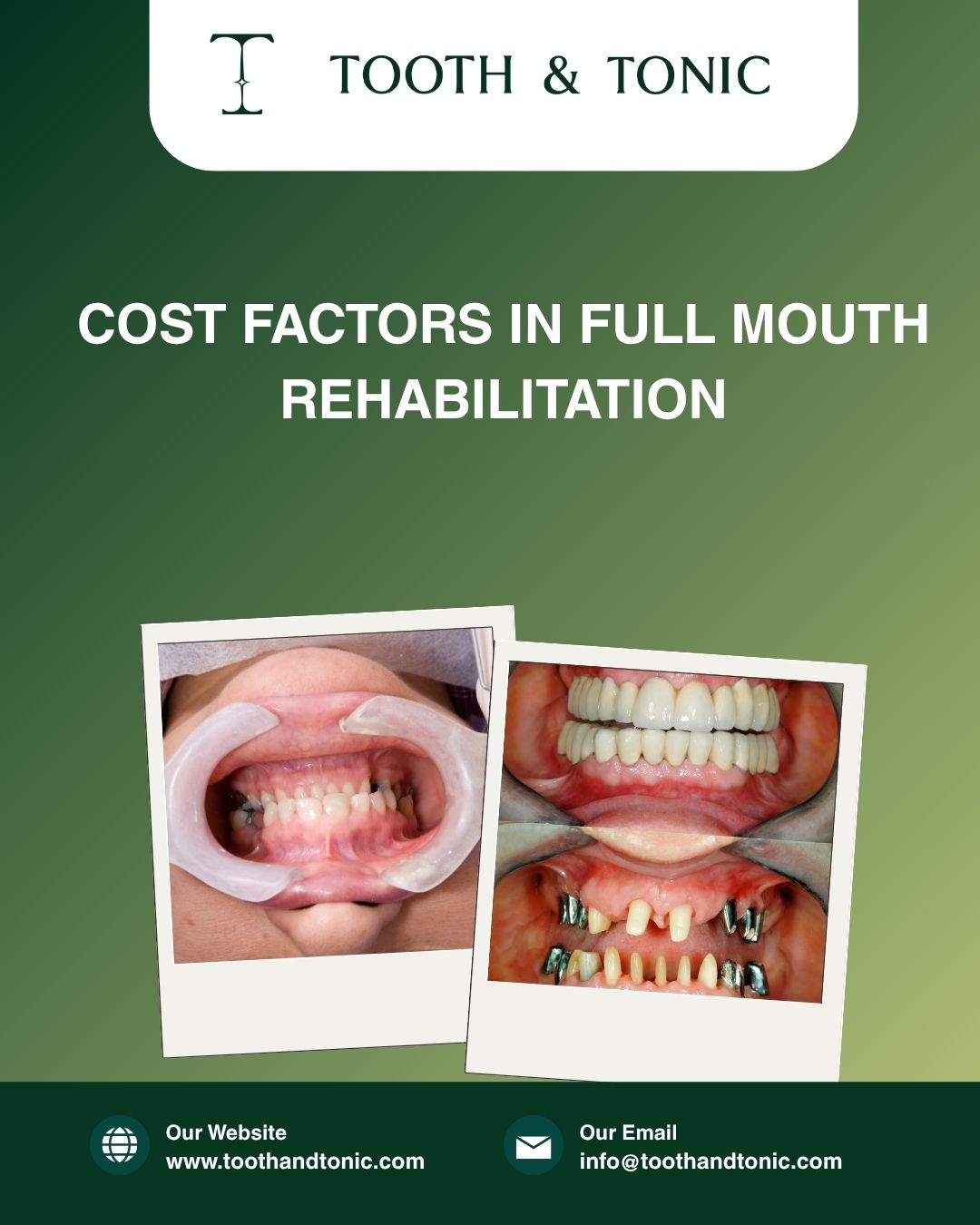
Cost Factors in Full Mouth Rehabilitation When multiple teeth become damaged, worn down, missing, or painful, everyday activities like eating, speaking, and smiling can become difficult. In such situations, dentists may recommend Full Mouth Rehabilitation—a personalised treatment approach that restores the function, health, and appearance of the entire mouth. One of the first questions patients …

Cost Factors in Full Mouth Rehabilitation
Table of Contents
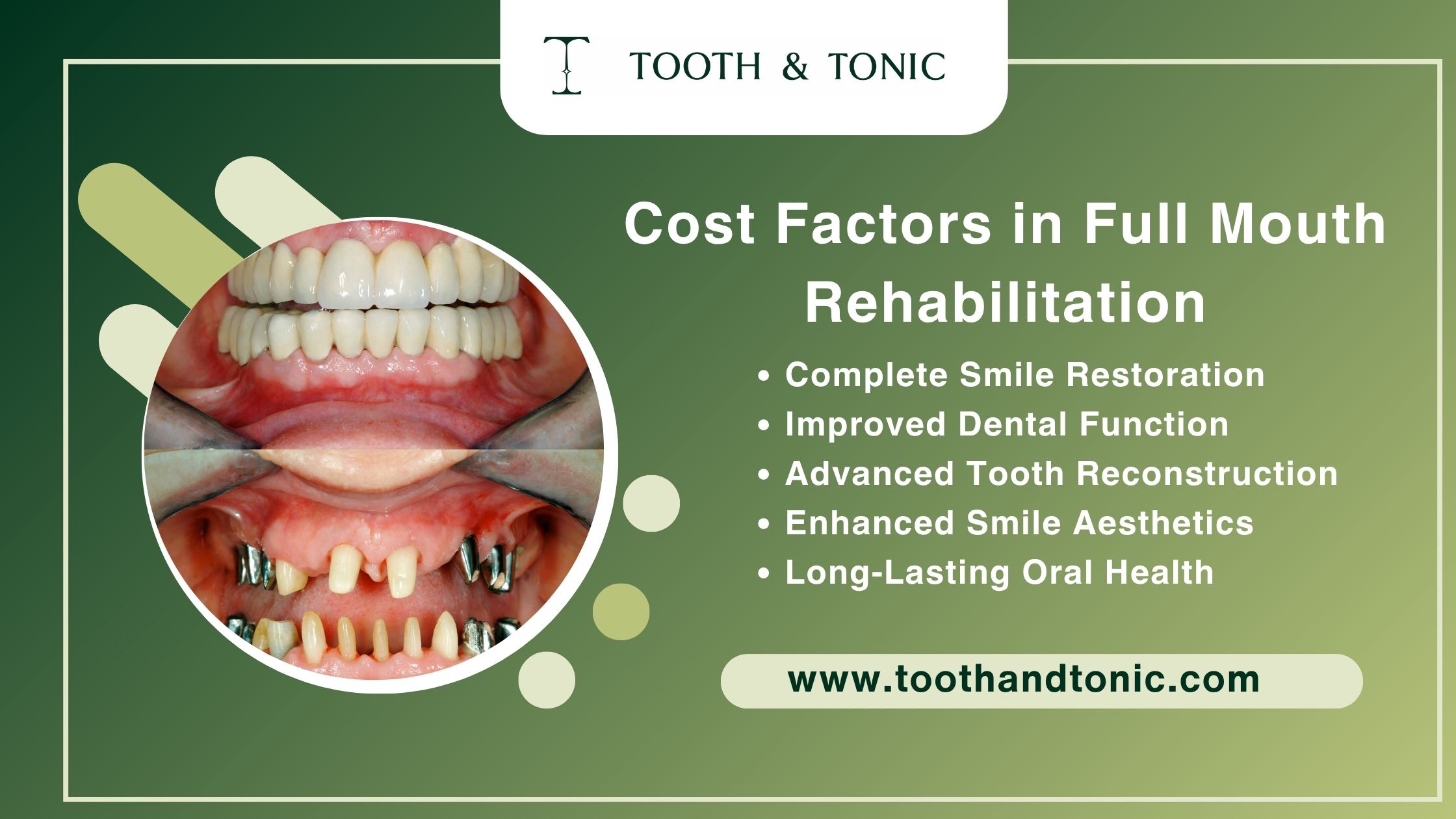
When multiple teeth become damaged, worn down, missing, or painful, everyday activities like eating, speaking, and smiling can become difficult. In such situations, dentists may recommend Full Mouth Rehabilitation—a personalised treatment approach that restores the function, health, and appearance of the entire mouth.
One of the first questions patients ask is:
“How much does Full Mouth Rehabilitation cost?”
The answer isn’t straightforward because Full Mouth Rehabilitation cost varies significantly from one person to another. Every mouth is unique, and every treatment plan is customised according to the patient’s dental condition.
This guide explains the major cost factors in Full Mouth Rehabilitation, helping you understand why treatment costs differ and what influences the final estimate.
What is Full Mouth Rehabilitation?
Full Mouth Rehabilitation (also called Full Mouth Reconstruction or Full Mouth Restoration) is a combination of dental procedures designed to rebuild or restore all or most teeth in the upper and lower jaws.
The goal is to improve:
- Chewing ability
- Speech
- Oral health
- Jaw function
- Smile aesthetics
- Overall comfort
Depending on the patient’s needs, treatment may involve:
- Dental implants
- Dental crowns
- Bridges
- Veneers
- Root canal treatment
- Gum therapy
- Bone grafting
- Orthodontic treatment
- Tooth extractions
- Bite correction
Every rehabilitation plan is different.
Who May Need Full Mouth Rehabilitation?
A dentist may recommend Full Mouth Rehabilitation for patients who have:
- Multiple missing teeth
- Broken or fractured teeth
- Severe tooth wear from grinding
- Advanced tooth decay
- Old failing dental work
- Gum disease affecting several teeth
- Bite problems
- Jaw discomfort caused by uneven bite
- Trauma involving multiple teeth
Not everyone requires every treatment. The rehabilitation plan depends entirely on clinical findings.
Why Does Full Mouth Rehabilitation Cost Vary?
Unlike a single filling or crown, Full Mouth Rehabilitation involves multiple procedures.
No two patients have identical dental conditions.
Several factors influence the total cost.
Let’s explore them.
Number of Teeth Requiring Treatment
One of the biggest cost factors is the number of teeth involved.
Some patients may need treatment on:
- 8 teeth
- 12 teeth
- 20 teeth
- Entire upper and lower arches
Naturally, treating more teeth generally increases the total treatment cost because additional materials, laboratory work, and clinical appointments are required.
Type of Dental Problems Present
The complexity of existing dental issues greatly affects pricing.
Examples include:
Mild Cases
- Minor tooth wear
- Few damaged crowns
- Limited fillings
Moderate Cases
- Several missing teeth
- Multiple root canals
- Moderate gum disease
Complex Cases
- Severe bite collapse
- Extensive tooth loss
- Bone loss
- Jaw problems
- Multiple failing restorations
More complex cases often require additional planning and specialised procedures.
Choice of Dental Restorations
The type of restoration selected significantly influences overall treatment costs.
These may include:
- Dental crowns
- Dental bridges
- Dental implants
- Veneers
- Partial dentures
- Complete dentures
Each option differs in:
- Material
- Manufacturing process
- Clinical time
- Longevity
- Maintenance requirements
The most appropriate option depends on the patient’s dental condition, oral health, treatment goals, lifestyle, and the dentist’s recommendation.
Material Used
Dental restorations are made from different materials.
Examples include:
- Porcelain
- Zirconia
- Ceramic
- Metal-ceramic
- Composite materials
Different materials vary in:
- Appearance
- Strength
- Wear resistance
- Suitability for specific teeth
Material selection contributes to the overall treatment cost.
Dental Implants (If Needed)
Dental implants are often included when replacing missing teeth.
However, not every patient requires implants.
If implants are part of the rehabilitation, costs depend on:
- Number of implants
- Implant system used
- Bone availability
- Surgical complexity
- Need for additional procedures
Bone Grafting or Sinus Lift Procedures
Some patients have insufficient jawbone to support implants.
Additional procedures may include:
- Bone grafting
- Sinus lift surgery
- Ridge augmentation
These procedures increase treatment time and overall costs.
Gum Health
Healthy gums are essential before restoring teeth.
If gum disease is present, treatment may involve:
- Deep cleaning
- Scaling and root planing
- Gum surgery
- Periodontal maintenance
Treating gum disease first creates a healthier foundation for long-term restorations.
Need for Root Canal Treatment
Some damaged teeth can be preserved with Root Canal Treatment (RCT).
Saving natural teeth may reduce the need for extraction in suitable cases.
If multiple teeth require RCT, the overall treatment cost increases.
Tooth Extractions
Certain teeth may be:
- Severely decayed
- Cracked beyond repair
- Loose due to gum disease
These teeth may require extraction before rehabilitation begins.
The number and complexity of extractions influence treatment costs.
Bite Correction
An uneven bite can place excessive force on teeth.
Your dentist may recommend bite correction through:
- Selective reshaping
- Crowns
- Orthodontic treatment
- Implant-supported restorations
Correcting bite problems helps improve function and may support the longevity of restorations.
Orthodontic Treatment (When Required)
Some patients benefit from orthodontic treatment before restorative procedures.
Depending on the case, this may involve:
- Braces
- Clear aligners
There is no universally better option between braces and clear aligners.
The right choice depends on:
- Individual dental condition
- Age
- Lifestyle
- Treatment goals
- Complexity of tooth movement
- Dentist’s recommendation
Not every patient undergoing Full Mouth Rehabilitation requires orthodontic treatment.
Diagnostic Tests and Digital Planning
Before treatment begins, dentists may recommend:
- Clinical examination
- Digital X-rays
- OPG
- CBCT scan
- Intraoral photographs
- Digital impressions
- Bite analysis
Comprehensive planning helps create a personalised treatment sequence.
Laboratory Work
Many restorations are custom-made by dental laboratories.
Laboratory costs depend on:
- Material used
- Technology
- Precision
- Number of restorations
- Digital workflow
High-quality laboratory work contributes to accurate fit and appearance.
Number of Clinical Appointments
Some rehabilitation cases require only a few visits, while others may extend over several months.
Appointments may include:
- Examination
- Diagnostic records
- Temporary restorations
- Surgery
- Crown placement
- Follow-up visits
- Bite adjustments
Longer treatment plans generally involve greater clinical time.
Experience of the Dental Team
Complex rehabilitation often requires collaboration between multiple dental professionals, such as:
- General dentists
- Prosthodontists
- Periodontists
- Endodontists
- Oral surgeons
- Orthodontists
The expertise involved in planning and coordinating treatment can influence costs.
What is the Typical Cost of Full Mouth Rehabilitation in India?
The cost depends on the procedures involved, materials chosen, and individual clinical needs.
Approximate ranges may include:
| Treatment Component | Approximate Cost (India) |
|---|---|
| Dental Crown | ₹8,000–₹25,000 per tooth |
| Root Canal Treatment | ₹6,000–₹12,000 per tooth |
| Dental Implant | ₹35,000–₹70,000+ per implant |
| Bone Grafting | ₹15,000–₹50,000+ |
| Gum Therapy | ₹10,000–₹25,000+ |
| Full Mouth Rehabilitation | Approximately ₹2.5 lakh to ₹12 lakh or more |
These figures are approximate and may vary depending on individual treatment needs, materials used, clinic location, and case complexity.
How Can Patients Plan Financially?
Patients can prepare by:
- Requesting a detailed treatment estimate
- Understanding each treatment phase
- Discussing alternative treatment options where appropriate
- Asking about staged treatment if clinically suitable
- Learning about payment plans offered by the clinic
A transparent discussion with the treating dentist helps patients make informed decisions.
How Does the Dentist Decide the Treatment Plan?
Every patient receives a customised treatment plan after evaluating:
- Oral health
- Number of remaining teeth
- Gum condition
- Jawbone quality
- Bite alignment
- Medical history
- Functional needs
- Aesthetic expectations
Because each case is unique, treatment recommendations—and therefore costs—can differ significantly.
Full Mouth Rehabilitation in Delhi
Patients considering Full Mouth Rehabilitation in Delhi often seek a clinic that provides a thorough evaluation, clear communication, and personalised treatment planning. At Tooth and Tonic Dental Clinic, New Delhi, treatment recommendations are based on comprehensive clinical assessment, diagnostic imaging, and the patient’s individual oral health needs. Since every rehabilitation case is different, the most suitable treatment approach and associated costs are determined only after a detailed consultation.
Frequently Asked Questions (FAQs)
What is Full Mouth Rehabilitation?
Full Mouth Rehabilitation is a customised combination of dental treatments designed to restore the health, function, and appearance of multiple or all teeth.
How much does Full Mouth Rehabilitation cost in India?
Costs vary widely depending on the number of teeth involved, procedures required, materials used, and case complexity. Treatment may range from approximately ₹2.5 lakh to ₹12 lakh or more.
Why is Full Mouth Rehabilitation expensive?
It often involves multiple procedures, advanced planning, customised restorations, laboratory work, and several clinical appointments.
Does everyone need dental implants?
No. Some patients may benefit from implants, while others may be treated with crowns, bridges, dentures, or other restorative options based on their clinical needs.
Can treatment be completed in one visit?
Most Full Mouth Rehabilitation cases require multiple appointments over several weeks or months, depending on the treatment plan.
Is Full Mouth Rehabilitation painful?
Dentists use appropriate anaesthesia and pain management techniques to improve patient comfort during procedures. Recovery experiences vary depending on the treatments performed.
Are crowns included in Full Mouth Rehabilitation?
They may be. Whether crowns are needed depends on the condition of the natural teeth and the overall treatment plan.
Will I need gum treatment before rehabilitation?
If gum disease is present, treating it first is often recommended to create a healthier foundation for restorative work.
Can orthodontic treatment be part of Full Mouth Rehabilitation?
Yes, in some cases. Braces or clear aligners may be recommended if tooth movement is needed before restorative treatment. The most suitable option depends on the individual’s dental condition, lifestyle, age, treatment goals, and the dentist’s clinical assessment.
How can I know the exact cost of my treatment?
A dentist can provide an accurate estimate after a clinical examination, diagnostic imaging, and a personalised treatment plan.
Conclusion
Full Mouth Rehabilitation is a highly personalised approach to restoring oral health, function, and aesthetics. Because every patient’s dental condition is different, there is no single cost that applies to everyone. Factors such as the number of teeth involved, the types of procedures required, the materials selected, the complexity of the case, and any additional treatments all contribute to the overall cost.
It is also important to remember that there is no universally better treatment option for every patient. Whether the plan includes dental implants, crowns, bridges, orthodontic treatment, or other procedures depends on each person’s oral health, lifestyle, age, treatment goals, and the dentist’s professional recommendation.
The most reliable way to understand your treatment options and expected costs is through a comprehensive consultation with a qualified dentist, who can assess your individual needs and develop a personalised treatment plan.