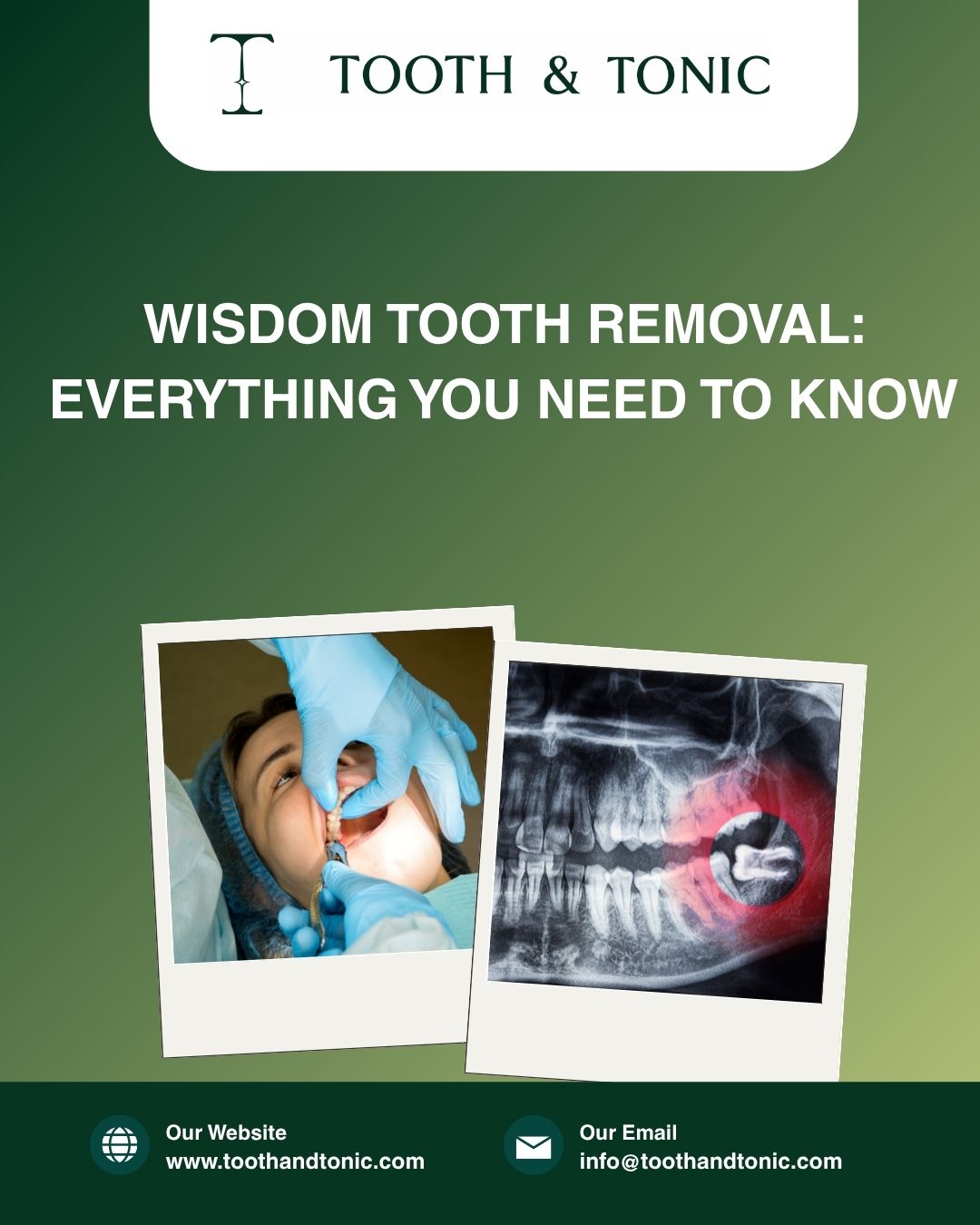
Wisdom Tooth Removal: Everything You Need to Know Wisdom teeth are the last permanent teeth to develop. While some people never experience problems with them, others may face pain, swelling, infection, or difficulty cleaning these teeth. In such situations, a dentist or oral surgeon may recommend wisdom tooth removal. If you've been told you may …

Wisdom Tooth Removal: Everything You Need to Know
Table of Contents
Wisdom teeth are the last permanent teeth to develop. While some people never experience problems with them, others may face pain, swelling, infection, or difficulty cleaning these teeth. In such situations, a dentist or oral surgeon may recommend wisdom tooth removal.
If you’ve been told you may need your wisdom teeth removed, it’s natural to have questions. Why do wisdom teeth cause problems? Is removal always necessary? What happens during the procedure? How long does recovery take?
This comprehensive guide explains everything you need to know about wisdom tooth extraction, including symptoms, causes, diagnosis, treatment options, recovery, possible risks, and frequently asked questions. The goal is to help you understand the process so you can make informed decisions together with your dentist.
What Are Wisdom Teeth?
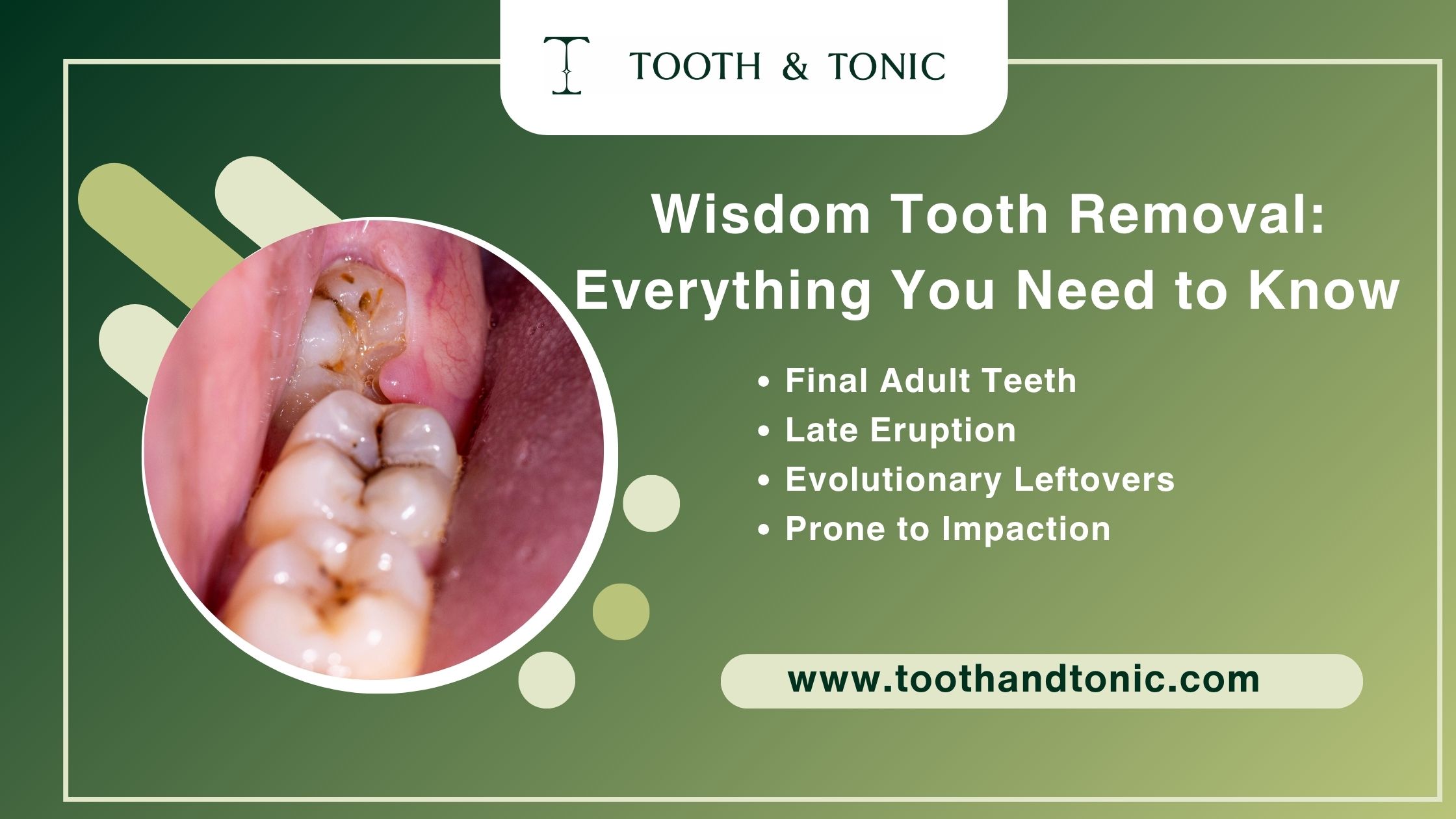
Wisdom teeth, also called third molars, are the last set of molars to emerge in the mouth. Most people develop four wisdom teeth:
- Upper right
- Upper left
- Lower right
- Lower left
They usually erupt between the ages of 17 and 25, although this can vary from person to person.
Many years ago, wisdom teeth were helpful because early humans had larger jaws and diets that caused significant tooth wear. Today, improved nutrition and smaller jaw sizes mean there often isn’t enough room for these teeth to erupt properly.
As a result, impacted wisdom teeth have become a common dental condition.
Why Do Wisdom Teeth Need Removal?
Not every wisdom tooth needs to be removed.
Some wisdom teeth:
- Erupt completely
- Are healthy
- Align properly
- Can be cleaned easily
- Do not damage neighboring teeth
However, removal may be considered if the tooth causes problems or is likely to cause complications in the future.
The decision depends on several factors, including:
- Age
- Jaw space
- Tooth position
- Oral hygiene
- Existing symptoms
- X-ray findings
- Overall dental health
There is no single treatment approach that is right for everyone. The best recommendation depends on each person’s dental condition and the clinical evaluation performed by a qualified dentist or oral surgeon.
What Is an Impacted Wisdom Tooth?
An impacted wisdom tooth is a tooth that cannot fully emerge because there is insufficient room in the jaw or its eruption path is blocked.
Impacted teeth may remain:
- Completely inside the bone
- Partially erupted
- Covered by gum tissue
- Positioned sideways
Several types of impactions exist:
Vertical Impaction
The tooth is upright but cannot erupt completely.
Mesio angular Impaction
The tooth leans toward the neighboring molar. This is one of the most common types.
Horizontal Impaction
The tooth lies sideways within the jawbone.
Distoangular Impaction
The tooth tilts away from the adjacent tooth.
Different types of impactions require different surgical approaches.
Signs You May Need Wisdom Tooth Removal
Some wisdom teeth never cause symptoms.
Others may lead to:
- Tooth pain
- Swollen gums
- Jaw pain
- Difficulty opening the mouth
- Bad breath
- Food getting trapped
- Gum infection
- Swelling near the back of the mouth
- Headaches related to jaw discomfort
- Pressure on nearby teeth
It’s important to remember that these symptoms can also occur because of other dental conditions. Only a proper examination can determine the exact cause.
Common Problems Caused by Wisdom Teeth
Not every wisdom tooth creates problems. However, complications may include:
Pain and Discomfort
One of the most common signs is wisdom tooth pain. As the tooth tries to erupt or presses against surrounding structures, it can cause discomfort at the back of the mouth.
Symptoms may include:
- Persistent or intermittent pain
- Jaw stiffness
- Pain while chewing
- Tenderness around the gums
Impacted Wisdom Teeth
An impacted wisdom tooth is one that cannot fully erupt because there isn’t enough space in the jaw. The tooth may remain partially or completely trapped beneath the gums or bone.
Impacted wisdom teeth can increase the risk of pain, infection, and damage to nearby teeth. However, not every impacted tooth needs to be removed. The decision depends on clinical findings and your dentist’s recommendation.
Gum Infection (Pericoronitis)
When a wisdom tooth only partially erupts, a flap of gum tissue may cover part of the tooth. This creates a space where food particles and bacteria can collect, leading to an infection called pericoronitis.
Common symptoms include:
- Swollen or red gums
- Pain near the wisdom tooth
- Bad breath
- Unpleasant taste in the mouth
- Difficulty opening the mouth
Tooth Decay (Cavities)
Because wisdom teeth are located at the back of the mouth, they can be difficult to clean effectively. This makes them more susceptible to tooth decay.
Plaque and food debris can also affect the neighboring second molar, increasing the risk of cavities in both teeth.
Damage to Adjacent Teeth
A wisdom tooth that grows at an angle may press against the tooth in front of it. Over time, this pressure can contribute to:
- Wear on the neighboring tooth
- Increased risk of cavities
- Bone loss around the adjacent tooth
- Difficulty maintaining oral hygiene
Gum Disease
Poor access for brushing and flossing around wisdom teeth can allow plaque and bacteria to accumulate, increasing the risk of gum disease.
Signs may include:
- Bleeding gums
- Swelling
- Gum tenderness
- Persistent bad breath
Cyst Formation
In some cases, a fluid-filled sac called a dental cyst may develop around an impacted wisdom tooth. Although uncommon, cysts can damage the surrounding bone or nearby teeth if left untreated.
Regular dental examinations and X-rays help detect these changes early.
Food Trapping and Bad Breath
Partially erupted wisdom teeth often create small spaces where food particles become trapped. This can lead to:
- Persistent bad breath
- Difficulty cleaning the area
- Increased bacterial growth
- Recurrent gum irritation
Maintaining good oral hygiene may become challenging when wisdom teeth are difficult to access.
Jaw Swelling and Difficulty Opening the Mouth
Inflammation or infection around a wisdom tooth can sometimes cause swelling of the jaw and temporary difficulty opening the mouth fully. These symptoms should be evaluated by a dentist, particularly if they worsen or are accompanied by fever.
Orthodontic and Bite Concerns
Although the relationship between wisdom teeth and crowding of the front teeth is still debated, a poorly positioned wisdom tooth may create pressure on nearby teeth or interfere with certain orthodontic treatment plans. Your dentist or orthodontist can determine whether the wisdom tooth is affecting your bite or alignment.
How Dentists Diagnose Wisdom Tooth Problems
Diagnosis usually includes:
Clinical Examination
The dentist checks for:
- Gum swelling
- Tenderness
- Infection
- Tooth position
- Mouth opening
Dental X-rays
An OPG (Orthopantomogram) or panoramic X-ray helps evaluate:
- Tooth position
- Root shape
- Bone level
- Relationship with nearby nerves
- Adjacent teeth
Sometimes, additional imaging such as a CBCT scan may be recommended for more complex cases.
When Is Wisdom Tooth Removal Recommended?
Your dentist may recommend wisdom tooth extraction if there is evidence of:
- Recurrent infection
- Tooth decay
- Gum disease
- Pain
- Swelling
- Damage to neighboring teeth
- Cyst formation
- Difficulty cleaning the area
- Orthodontic concerns in selected cases
However, if a wisdom tooth is healthy, functional, fully erupted, and easy to clean, removal may not be necessary.
Treatment decisions should always be individualized rather than based on age alone.
How Is Wisdom Tooth Removal Performed?
The exact procedure depends on the tooth’s position and complexity.
Typical steps include:
- Examination
- Review of X-rays
- Local anesthesia or other appropriate anesthesia
- Small incision if required
- Removal of bone if necessary
- Sectioning the tooth in complex cases
- Tooth removal
- Cleaning the area
- Stitches when needed
The procedure may take anywhere from 20 minutes to over an hour depending on the complexity of the case.
Is Wisdom Tooth Removal Painful?
Modern anesthesia techniques help minimize discomfort during the procedure.
Most patients experience pressure rather than pain while the tooth is being removed.
After the anesthesia wears off, some soreness, swelling and stiffness are common. These usually improve gradually over several days with appropriate aftercare.
Recovery experiences vary from one person to another.
Recovery After Wisdom Tooth Removal
Most people return to their normal routine within a few days, although healing of the bone and gums takes longer.
General recovery tips include:
- Rest for the first 24 hours.
- Use cold packs to reduce swelling.
- Take medications exactly as prescribed.
- Eat soft foods.
- Stay hydrated.
- Avoid smoking and alcohol during healing.
- Maintain oral hygiene while avoiding the surgical area initially.
- Attend follow-up appointments if advised.
Possible Risks and Complications
Like any surgical procedure, wisdom tooth removal has potential risks, although many patients recover without significant problems.
Possible complications may include:
- Bleeding
- Swelling
- Infection
- Dry socket
- Temporary jaw stiffness
- Temporary numbness in rare cases
- Delayed healing
Your dentist will discuss the potential risks based on your individual case and medical history.
Frequently Asked Questions
Is wisdom tooth removal always necessary?
No. If wisdom teeth are healthy, fully erupted, functional, and easy to clean, removal may not be required.
At what age are wisdom teeth usually removed?
They commonly erupt between ages 17 and 25, but removal depends on individual circumstances rather than age alone.
How long does wisdom tooth removal take?
Simple extractions may take 20–30 minutes, while more complex surgical removals can take longer.
How long is recovery?
Most people feel significantly better within 3–7 days, although complete healing can take several weeks.
What foods can I eat afterward?
Soft foods such as yogurt, soups, mashed potatoes, smoothies, oatmeal and scrambled eggs are commonly recommended during early recovery.
Can I return to work the next day?
Some people can, while others may need additional rest depending on the complexity of the procedure and their recovery.
What is dry socket?
Dry socket occurs when the protective blood clot is lost before the extraction site heals, exposing the underlying bone and causing pain.
Can wisdom teeth cause headaches?
In some cases, impacted wisdom teeth may contribute to jaw discomfort that can be associated with headaches, although headaches have many possible causes.
Is wisdom tooth surgery safe?
For most patients, wisdom tooth removal is a commonly performed procedure. As with any surgery, there are potential risks, which your dentist will discuss before treatment.
How do I know if I need wisdom tooth removal?
A dental examination and appropriate imaging are the best way to determine whether removal is recommended for your situation.
Patients looking for information about oral surgery treatment in Delhi, extractions in Delhi, or wisdom tooth extraction in Delhi often seek guidance on when removal is necessary and what to expect during recovery. At Tooth and Tonic Dental Clinic, treatment recommendations are based on each patient’s oral health, symptoms, X-ray findings, and overall dental goals. An individualized assessment helps determine whether monitoring, conservative care, or surgical removal is the most appropriate option.
Conclusion
Wisdom tooth removal is a common oral surgery procedure, but it is not automatically necessary for everyone. Some wisdom teeth remain healthy and functional throughout life, while others may lead to pain, infection or damage to nearby teeth.
There is no universally better option. The right approach depends on your individual dental condition, age, lifestyle, treatment goals, X-ray findings and your dentist’s professional recommendation.
If you are experiencing symptoms or have concerns about your wisdom teeth, a consultation with an oral surgeon or a dentist is the best way to understand your options and determine the most suitable treatment plan for your specific needs.