Dental Veneers: Everything You Need to Know, Including Cost A smile is one of the first things people notice, and small changes to the appearance of your teeth can sometimes make a noticeable difference. Dental veneers are one of the cosmetic dentistry options used to improve the appearance of teeth affected by discoloration, minor chips, …

Dental Veneers: Everything You Need to Know, Including Cost
Table of Contents
A smile is one of the first things people notice, and small changes to the appearance of your teeth can sometimes make a noticeable difference. Dental veneers are one of the cosmetic dentistry options used to improve the appearance of teeth affected by discoloration, minor chips, uneven shapes, or small gaps.
However, veneers are not suitable for everyone, and they are not simply a cosmetic “cover” that can be placed on any tooth. A dentist needs to assess your teeth, gums, bite, oral hygiene, and overall dental health before deciding whether veneers are appropriate.
This guide explains what dental veneers are, the different types available, how the treatment works, advantages and limitations, how long veneers may last, and the cost of dental veneers in India and Delhi.
What Are Dental Veneers?
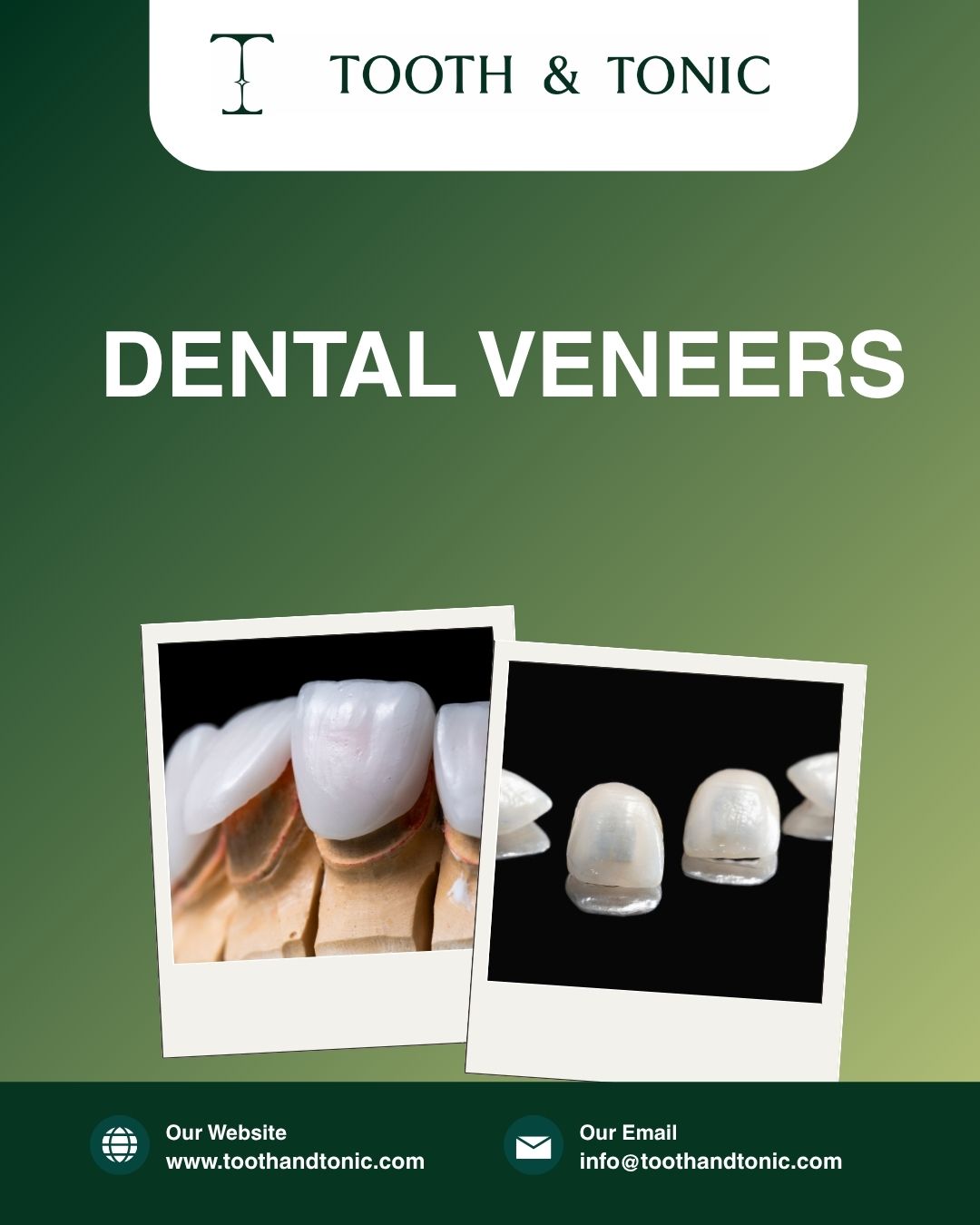
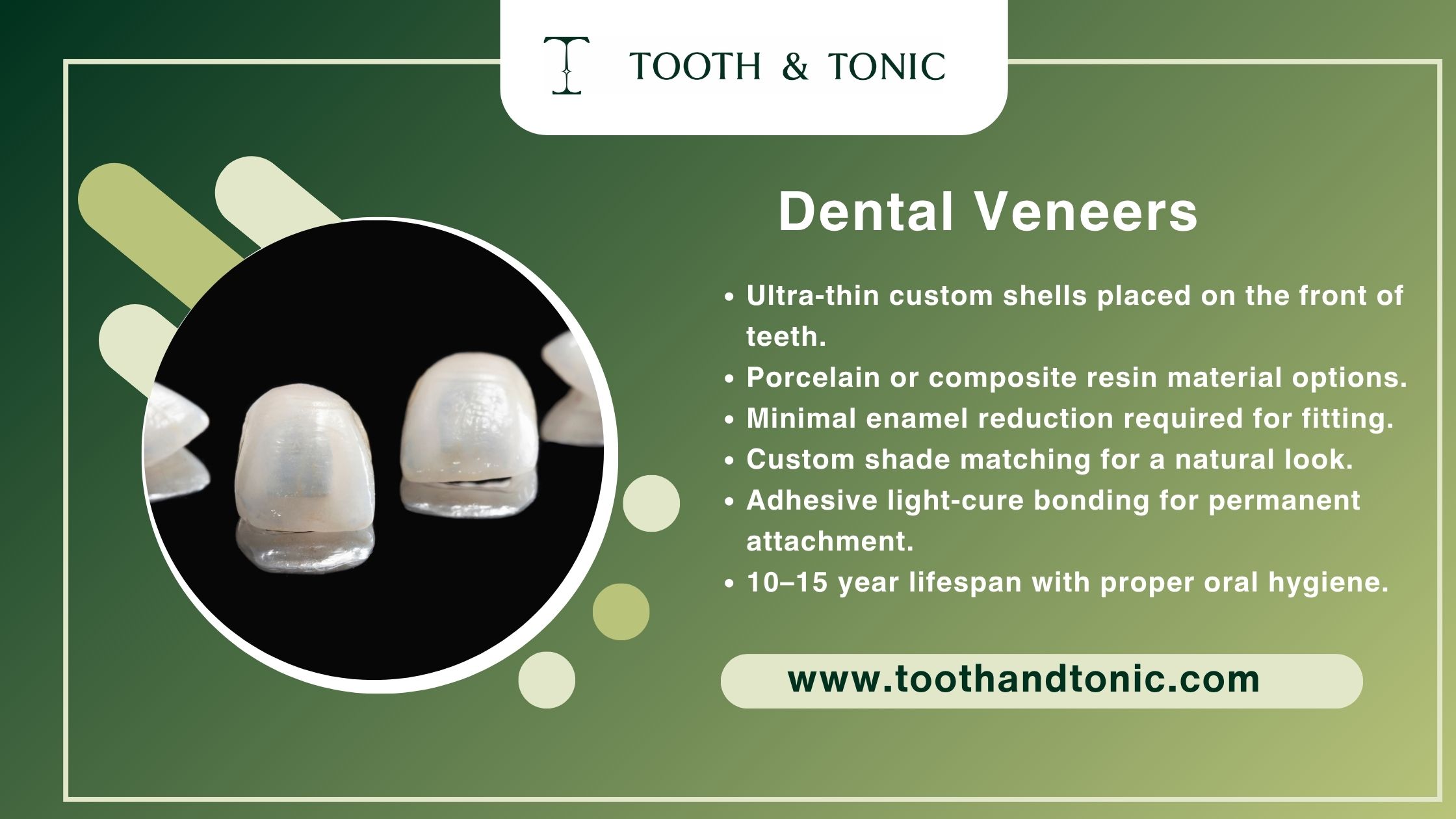
Dental veneers are thin, tooth-coloured coverings designed to bond to the visible front surface of a tooth. They are commonly used as part of cosmetic dentistry to modify the colour, shape, size, or appearance of selected teeth.
Veneers may be made from porcelain or dental ceramic, or from composite resin. The choice depends on factors such as the condition of the teeth, desired appearance, bite, budget, and treatment objectives.
According to the NHS, veneers are facings placed over the front of teeth and may involve removing a small amount of tooth structure depending on the type and technique used.
Unlike a dental crown, a veneer generally covers only the front surface of the tooth rather than surrounding the entire tooth.
What Problems Can Dental Veneers Address?
Depending on the individual case, veneers can be used to improve the appearance of teeth with:
- Persistent discoloration
- Certain types of intrinsic staining
- Minor chips or worn edges
- Uneven tooth shapes
- Small gaps between teeth
- Mild irregularities in tooth appearance
- Certain aesthetic concerns that do not respond adequately to whitening
However, veneers do not automatically correct underlying dental problems. For example, active tooth decay, gum disease, significant bite problems, or severely weakened teeth may need to be addressed first.
Types of Dental Veneers
There are several materials and techniques used for veneers. The two broad categories are composite veneers and porcelain or ceramic veneers.
Composite Veneers
Composite veneers are made using tooth-coloured resin material. The dentist can often apply and shape the material directly on the tooth.
Potential advantages
- Usually more affordable
- Often requires less laboratory work
- Can sometimes be completed in fewer appointments
- Can be repaired or modified relatively easily
- Useful for selected minor cosmetic changes
Limitations
Composite material can be more susceptible to staining, wear, and chipping than some ceramic materials. The long-term appearance also depends on factors such as oral hygiene, diet, biting forces, and maintenance.
Porcelain Veneers
Porcelain veneers are thin ceramic restorations fabricated to fit the planned tooth shape and then bonded to the tooth.
They are widely used when patients want a highly aesthetic result and may offer good colour stability compared with some resin materials.
Depending on the case, different ceramic systems may be considered, including feldspathic porcelain and lithium-disilicate-based ceramics.
Potential advantages
- Natural-looking appearance
- Good colour stability
- High-quality ceramics can provide excellent aesthetics
- Can be designed to closely match neighbouring teeth
Limitations
- Generally more expensive than composite veneers
- Often requires laboratory fabrication
- Some tooth preparation may be required
- Ceramic can chip or fracture under excessive forces
- Repair can be more complicated than repairing composite
Porcelain Veneers vs Composite Veneers
There is no universally “best” veneer material.
The right option depends on the patient’s teeth, aesthetic expectations, bite, lifestyle, budget, and dentist’s assessment.
| Feature | Composite Veneers | Porcelain/Ceramic Veneers |
| Material | Resin-based composite | Dental ceramic/porcelain |
| Cost | Usually lower | Usually higher |
| Treatment time | Often shorter | Usually requires laboratory fabrication |
| Appearance | Good | Often highly aesthetic |
| Stain resistance | Moderate | Generally better |
| Repairability | Relatively easy | More complex |
| Durability | Depends on case and maintenance | Depends on material, bite and maintenance |
| Tooth preparation | May be minimal in selected cases | May require preparation |
| Best suited for | Selected minor cosmetic changes | Selected cases requiring ceramic aesthetics |
Who Is a Good Candidate for Dental Veneers?
Dental veneers may be considered when a person has generally healthy teeth and gums and wants to address specific cosmetic concerns.
A dentist may evaluate:
- Tooth structure
- Existing fillings or crowns
- Gum health
- Tooth decay
- Enamel condition
- Bite and tooth contact
- Tooth alignment
- Bruxism or teeth grinding
- Oral hygiene
- Smile proportions
- The patient’s expectations
Veneers may not be appropriate if the teeth are severely weakened or if there are untreated dental or periodontal problems.
For this reason, a proper dental examination should come before deciding on cosmetic dental veneers.
When Are Veneers Not the Best Option?
Veneers are not always the most conservative or appropriate treatment.
For example, if the main concern is simply tooth colour, professional teeth whitening may be worth considering before veneers.
If a tooth has a small chip or minor shape irregularity, composite bonding may sometimes achieve the desired improvement without requiring a ceramic veneer.
Similarly, if teeth are significantly crowded or malaligned, orthodontic treatment or clear aligners may be more appropriate.
If a tooth has extensive structural damage, a dental crown or another restorative option may be considered instead.
The important point is that cosmetic dentistry should begin with diagnosis rather than selecting a procedure first.
How Does the Dental Veneer Procedure Work?
The exact process varies according to the type of veneer and the treatment plan.
Step 1: Consultation and Dental Examination
The dentist first discusses your concerns and expectations.
An examination may include:
- Checking teeth and gums
- Assessing the bite
- Evaluating existing restorations
- Reviewing tooth colour and shape
- Taking photographs
- Digital scanning or impressions when required
Step 2: Smile and Treatment Planning
The dentist plans the desired tooth shape, size, colour and proportions.
In some cases, digital smile design or diagnostic models may be used to help visualize the proposed changes.
The goal is not simply to make teeth whiter. The design should also consider facial proportions, lip position, tooth length, gum display and the relationship between the upper and lower teeth.
Step 3: Tooth Preparation
Depending on the veneer system and individual case, a small amount of enamel may need to be removed.
Some veneer cases can be performed with minimal preparation, while others require more.
This is one reason why patients should be cautious about choosing veneers based solely on social media images or promises of “no-prep” treatment.
Step 4: Scanning or Impressions
A digital intraoral scan or conventional impression may be taken.
The information is used to create the final restorations.
Step 5: Temporary Veneers, When Required
Depending on the preparation and treatment plan, temporary restorations may be placed while the definitive veneers are being fabricated.
Step 6: Try-In and Evaluation
Before final bonding, the veneers may be evaluated for:
- Shape
- Colour
- Size
- Fit
- Smile appearance
- Bite
Step 7: Bonding
Once the dentist is satisfied with the fit and treatment plan, the veneers are bonded to the teeth using dental adhesive systems.
The final result depends on careful planning, material selection, preparation, bonding technique, and maintenance.
Are Dental Veneers Permanent?
One common misconception is that veneers are completely permanent.
They are better described as long-term dental restorations, not lifetime restorations.
Ceramic veneers can have good longevity when properly planned and maintained, but they can still experience problems such as:
- Chipping
- Fracture
- Debonding
- Wear
- Discoloration around margins
- Changes in the supporting tooth or gums
The lifespan of a veneer varies significantly between patients.
How Long Do Dental Veneers Last?
There is no single guaranteed lifespan for dental veneers.
Their longevity depends on:
- Veneer material
- Quality of bonding
- Amount of remaining tooth structure
- Bite
- Teeth grinding or clenching
- Oral hygiene
- Diet
- Habits such as nail biting or chewing hard objects
- Regular dental care
Ceramic veneers may remain functional for many years, but they can eventually require repair or replacement.
For this reason, it is better to think about veneers as a long-term treatment that requires maintenance rather than a one-time permanent solution.
Are Dental Veneers Painful?
The experience varies depending on how much tooth preparation is required and the individual’s sensitivity.
If preparation is necessary, local anesthesia may be used where appropriate.
Some patients may experience temporary sensitivity following treatment.
However, discomfort should not simply be ignored. If significant or persistent pain develops after veneer placement, the dentist should evaluate the tooth.
Do Veneers Damage Your Natural Teeth?
This is one of the most common questions about dental veneers.
The answer depends on the treatment approach.
Some veneers require removal of a small amount of enamel, while selected cases may require minimal or no preparation.
Once enamel has been removed, it does not naturally grow back. Therefore, patients should understand the implications of treatment before proceeding.
This is why veneer treatment should be planned and performed by a qualified dental professional rather than through unlicensed or unsupervised services. The American Dental Association has specifically warned that unsupervised veneer treatment can cause irreversible dental complications.
How to Take Care of Dental Veneers
Veneers do not eliminate the need for good oral hygiene.
You should continue to:
- Brush twice daily with a suitable fluoride toothpaste
- Clean between your teeth regularly
- Attend routine dental check-ups
- Avoid using your teeth to open packages
- Avoid biting very hard objects
- Address teeth grinding if present
- Maintain a balanced diet
- Follow your dentist’s specific maintenance advice
Importantly, the natural tooth underneath a veneer can still develop dental problems.
Therefore, veneers do not make teeth immune to decay or gum disease.
Dental Veneers Cost in India
The cost of dental veneers in India varies considerably.
A realistic estimate depends on:
- Type of veneer
- Material used
- Number of teeth
- Laboratory charges
- Complexity of the case
- Dentist’s experience
- Need for preliminary dental treatment
- Digital planning and scanning
- Location of the clinic
As a broad 2026 reference, published Delhi clinic pricing places composite veneers at roughly ₹8,000–₹12,000 per tooth, while porcelain or ceramic veneers can range approximately from ₹10,000–₹20,000 or more per tooth, depending on the material and treatment approach. These are indicative market ranges rather than fixed prices.
Premium ceramic systems may cost more.
Approximate Veneer Cost in Delhi
| Type | Indicative cost per tooth |
| Composite veneers | ₹8,000–₹12,000 |
| Standard porcelain veneers | ₹10,000–₹15,000+ |
| Premium ceramic veneers | ₹15,000–₹20,000+ |
These figures should be treated as approximate dental veneer cost ranges in Delhi, not quotations.
The total treatment cost can be substantially different depending on whether one tooth, several front teeth, or a larger smile design is being treated.
What Is Included in the Cost of Dental Veneers?
When comparing veneers cost in Delhi, it is useful to ask what the quoted price includes.
Potential components include:
- Initial dental consultation
- Dental examination
- X-rays or other diagnostic records, when required
- Digital intraoral scanning
- Smile or aesthetic planning
- Tooth preparation
- Temporary restorations, where required
- Laboratory fabrication
- Try-in appointment
- Final bonding
- Follow-up appointments
If preliminary treatment such as pre operative mock-up smile, fillings, gum treatment, whitening, or orthodontic correction is required, that may add to the overall cost.
Are Dental Veneers Worth the Cost?
Whether veneers are “worth it” depends entirely on the individual.
For someone with a specific cosmetic concern that can be effectively addressed with veneers, they may be a suitable option.
However, veneers are not automatically the best investment for every cosmetic concern.
For example:
- Whitening may be more appropriate for certain staining concerns.
- Composite bonding may be suitable for some minor chips or shape changes.
- Orthodontic treatment may be better for significant alignment problems.
- Crowns may be more appropriate for extensively damaged teeth.
- In some cases, no cosmetic treatment may be necessary at all.
The most appropriate choice should balance aesthetics, dental health, tooth preservation, function, longevity, lifestyle, and cost.
Dental Veneers vs Other Cosmetic Dental Treatments
Veneers vs Teeth Whitening
Teeth whitening changes the colour of natural teeth but does not change their shape.
Veneers can change both colour and shape.
Therefore, whitening may be preferable when colour is the main concern and the teeth are otherwise aesthetically acceptable.
Veneers vs Composite Bonding
Composite bonding can often address small chips, gaps, and shape irregularities with relatively little alteration to the tooth.
Veneers may be considered when greater changes in colour, shape, or overall appearance are desired.
Veneers vs Dental Crowns
A veneer generally covers the visible front surface of a tooth, whereas a crown covers much more of the tooth.
A crown may be considered when a tooth has substantial structural damage.
Veneers vs Orthodontic Treatment
Veneers can alter the appearance of tooth position and shape, but they do not move teeth in the same way orthodontic treatment does.
For significant crowding or bite problems, orthodontic treatment may be more appropriate.
What Can Cause Veneers to Fail?
Several factors can affect the success and longevity of veneer treatment.
These include:
- Poor oral hygiene
- Untreated gum disease
- Tooth decay
- Excessive biting forces
- Teeth grinding
- Poor bonding conditions
- Inappropriate case selection
- Trauma
- Chipping or fracture
- Failure to maintain regular dental care
This is why the quality of the treatment plan is as important as the veneer material itself.
Can You Get Veneers on All Your Teeth?
Technically, multiple teeth can be treated with veneers, but that does not mean all teeth should be covered.
A full smile makeover may involve several cosmetic procedures rather than veneers alone.
The number of teeth treated depends on:
- Smile width
- Tooth visibility
- Facial proportions
- Existing tooth shape
- Colour differences
- Bite
- Patient expectations
A dentist should determine the appropriate number based on the overall smile rather than a fixed package or social-media trend.
Choosing the Right Treatment
For people considering cosmetic dental treatment, it is important to look beyond photographs and price alone.
A proper consultation should include an assessment of dental health and a discussion about:
- Your desired outcome
- Tooth preparation
- Material options
- Expected maintenance
- Potential limitations
- Alternatives
- Total treatment cost
At Tooth and Tonic Dental Clinic, patients considering veneers may discuss their cosmetic concerns and treatment options as part of a broader approach to esthetic treatment. The appropriate treatment should be based on individual dental condition, lifestyle, age, expectations, and clinical assessment rather than choosing a particular procedure in advance.
Frequently Asked Questions About Dental Veneers
What are dental veneers?
Dental veneers are thin tooth-coloured restorations bonded to the front surface of teeth to improve their appearance. They can be made from materials such as porcelain/ceramic or composite resin.
How much do dental veneers cost in India?
The cost of dental veneers in India varies by material, dentist, location, laboratory, and number of teeth treated. In 2026, indicative published Delhi prices range from around ₹8,000 or more per tooth for some composite veneers to ₹20,000 or more per tooth for premium ceramic options.
Are porcelain veneers better than composite veneers?
Neither material is universally better. Porcelain may offer advantages in aesthetics and colour stability, while composite veneers can be more affordable and easier to repair. The appropriate material depends on the individual case.
Are dental veneers permanent?
Dental veneers are considered long-term restorations, but they are not guaranteed to last permanently. They can eventually require repair or replacement.
Do veneers damage natural teeth?
Some veneers require removal of a small amount of enamel, while selected techniques may involve minimal preparation. Because enamel does not naturally grow back, the implications of preparation should be discussed with a dentist before treatment.
Do veneers look natural?
Well-planned veneers can be designed to resemble natural teeth, with attention to colour, translucency, shape, size, and proportions. The final appearance depends on the material, planning, laboratory work, and clinical technique.
Can veneers fix crooked teeth?
Veneers can sometimes improve the appearance of mildly irregular teeth, but they do not replace orthodontic tooth movement. More significant alignment problems may require orthodontic treatment.
Can veneers fix gaps between teeth?
Veneers can sometimes close small gaps between teeth, depending on the size of the gap and the surrounding tooth proportions. Other options, such as orthodontics or composite bonding, may also be considered.
Can veneers stain?
Porcelain and ceramic veneers are generally resistant to staining, but the surrounding natural teeth and composite materials can change colour over time. Good oral hygiene and regular dental care remain important.
How long does it take to get veneers?
Treatment time varies. Composite veneers may sometimes be completed in fewer appointments, while porcelain veneers usually require planning, preparation, fabrication and bonding appointments.
Can veneers fall off?
Veneers can occasionally debond or fracture. Risk can be influenced by bonding, tooth structure, bite, trauma, and habits such as teeth grinding or biting hard objects.
Are veneers painful?
Veneer treatment is not necessarily painful, although some patients may experience sensitivity or discomfort, particularly when tooth preparation is required. Your dentist can discuss pain-control options appropriate to your procedure.
Can you eat normally with veneers?
Most patients can eat normally after appropriate veneer placement, but it is sensible to avoid using the teeth to bite very hard objects and to follow the dentist’s specific instructions.
Are veneers suitable for everyone?
No. Veneers are not suitable for everyone. The condition of the teeth and gums, bite, oral hygiene, age, lifestyle, treatment goals, and other factors must be considered before treatment.
Final Thoughts: Are Dental Veneers Right for You?
Dental veneers can be an effective cosmetic option for selected patients who want to change the colour, shape, size or appearance of certain teeth.
However, veneers are not a universal solution.
There is no universally better veneer material or cosmetic dental treatment. Composite, porcelain, whitening, bonding, orthodontics, crowns, or no treatment at all may be appropriate depending on the situation.
The best choice depends on your dental condition, lifestyle, age, treatment goals, expectations, bite, budget and dentist’s recommendation.
If you are considering veneers, the most useful first step is a comprehensive dental consultation. This allows the dentist to assess your oral health, explain the available options, discuss the advantages and limitations of each approach, and provide a treatment plan based on your individual needs.
For patients exploring veneers, cosmetic dental treatment, or other forms of esthetic treatment, an individualized assessment is more useful than choosing treatment based solely on online photographs, trends, or advertised prices.