
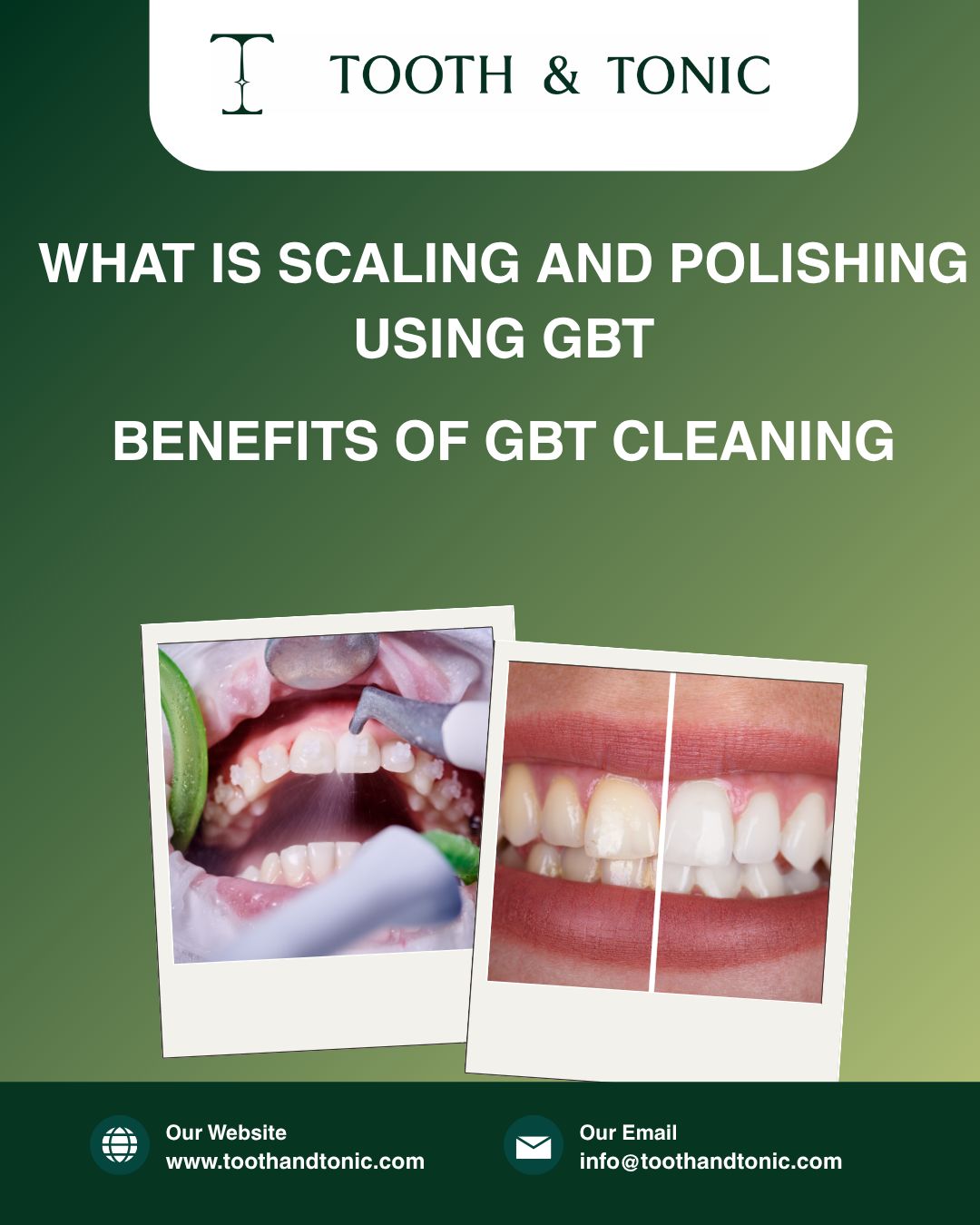
What Is GBT Scaling & Polishing? Benefits of GBT Cleaning Introduction Maintaining good oral hygiene involves much more than brushing and flossing at home. Even with excellent daily habits, plaque, tartar, and bacterial deposits can build up in areas that are difficult to clean thoroughly. This is where professional teeth cleaning, dental scaling and polishing, and …

What Is GBT Scaling & Polishing? Benefits of GBT Cleaning
Table of Contents
Introduction
Maintaining good oral hygiene involves much more than brushing and flossing at home. Even with excellent daily habits, plaque, tartar, and bacterial deposits can build up in areas that are difficult to clean thoroughly. This is where professional teeth cleaning, dental scaling and polishing, and newer technologies such as Guided Biofilm Therapy (GBT) come into the picture.
Many patients searching online for professional teeth cleaning, GBT cleaning, Guided Biofilm Therapy, or scaling and polishing often wonder:
- What exactly is GBT?
- How is it different from traditional scaling?
- Is GBT painful?
- Is GBT better than ultrasonic cleaning?
- Which option is right for me?
The answer is not always straightforward.
Both traditional cleaning methods and GBT Scaling & Polishing have their place in modern dentistry. The most suitable treatment depends on several factors, including a person’s oral health condition, age, lifestyle, existing dental work, treatment goals, and the dentist’s clinical assessment.
In this article, we will explain everything you need to know about scaling and polishing using GBT, its benefits, how it works, and how it compares with conventional dental cleaning approaches.
Understanding Dental Scaling and Polishing
What Is Dental Scaling?
Dental scaling is a professional cleaning procedure used to remove:
- Plaque
- Tartar (calculus)
- Bacterial deposits
- Surface stains
These deposits can accumulate above and below the gum line over time.
Unlike plaque, tartar cannot be removed by brushing alone. Professional dental instruments are required to safely clean these hardened deposits.
Why Is Scaling Important?
Regular dental scaling may help:
- Reduce plaque accumulation
- Improve gum health
- Remove tartar deposits
- Freshen breath
- Support overall oral hygiene
Dentists often recommend professional cleaning as part of preventive dental care.
What Is Dental Polishing?
After scaling, many patients undergo teeth polishing.
Polishing helps smooth the tooth surfaces and remove minor stains that remain after cleaning.
Common causes of staining include:
- Tea
- Coffee
- Tobacco
- Certain foods
- Age-related discoloration
A smoother tooth surface may also make it more difficult for plaque to accumulate quickly.
What Is Guided Biofilm Therapy (GBT)?
Understanding Biofilm
Before discussing GBT Scaling & Polishing, it is important to understand dental biofilm.
Dental biofilm is a thin layer of bacteria that naturally forms on teeth, gums, restorations, and dental implants.
If biofilm is not adequately removed, it may contribute to:
- Plaque formation
- Tartar buildup
- Gum inflammation
- Bad breath
Because biofilm is often colorless and difficult to see, complete removal can be challenging.
What Is GBT Cleaning?
Guided Biofilm Therapy (GBT) is a systematic approach to professional dental cleaning that focuses on identifying and removing biofilm before addressing remaining deposits.
The process generally involves:
- Assessment of oral health
- Biofilm disclosure
- Removal of biofilm
- Removal of tartar and deposits
- Final evaluation
The term “guided” refers to the use of a disclosing agent that highlights biofilm, making it easier for both the dentist and patient to see where cleaning is needed.
How Does GBT Cleaning Work?
Although treatment protocols may vary, GBT Scaling & Polishing commonly follows a structured sequence.
Step 1: Oral Examination
The dentist first evaluates:
- Teeth
- Gums
- Existing restorations
- Implants
- Orthodontic appliances
This helps determine the patient’s cleaning needs.
Step 2: Biofilm Disclosure
A harmless colored dye is applied to reveal biofilm deposits.
This step helps:
- Identify problem areas
- Improve patient awareness
- Guide cleaning procedures
Many patients find this educational because it visually demonstrates areas requiring better home care.
Step 3: Biofilm Removal
Specialized airflow technology may be used to remove disclosed biofilm.
This process typically combines:
- Air
- Water
- Fine cleaning powder
The goal is to clean tooth surfaces and hard-to-reach areas efficiently.
Step 4: Removal of Remaining Deposits
If tartar or calculus remains, additional instruments may be used.
These may include:
- Ultrasonic scalers
- Hand instruments
- Other professional dental tools
The choice depends on the individual’s needs.
Step 5: Final Evaluation
The dentist checks:
- Remaining deposits
- Gum condition
- Oral hygiene status
Patients may also receive personalized oral hygiene advice.
Benefits of GBT Cleaning
Many dental professionals use GBT because of several potential advantages like negligible intra operative and post operative sensitivity, no micro scratches on the tooth surface and comfortable experience.
However, it is important to remember that benefits can vary from patient to patient.
Improved Biofilm Detection
One of the key features of Guided Biofilm Therapy is the use of disclosing agents.
Benefits include:
- Better visibility of plaque
- Targeted cleaning
- Increased patient awareness
Enhanced Patient Education
Seeing biofilm highlighted on teeth often helps patients understand:
- Where plaque accumulates
- Which areas need more attention
- How to improve brushing techniques
This educational aspect is often considered valuable.
Access to Hard-to-Reach Areas
GBT Scaling & Polishing may assist in cleaning:
- Between teeth
- Around orthodontic brackets
- Around implants
- Around crowns and bridges
These areas can sometimes be difficult to clean effectively.
Suitable for Various Dental Conditions
GBT can be used for many patients, including those with:
- Braces
- Dental implants
- Crowns
- Bridges
- Veneers
The dentist determines whether the technique is appropriate for the specific case.
Focus on Preventive Care
Because GBT Scaling & Polishing emphasizes biofilm removal and patient education, it aligns closely with preventive dentistry principles.
Preventive care aims to support long-term oral health through regular maintenance and early intervention.
Patient Comfort
Some patients report that GBT Scaling & Polishing feels comfortable because much of the cleaning process focuses on biofilm removal before tackling harder deposits.
However, comfort levels vary significantly based on:
- Individual sensitivity
- Gum condition
- Amount of tartar
- Existing oral health issues
Is GBT Better Than Ultrasonic Cleaning?
This is one of the most common questions patients ask.
The simple answer is:
There is no universally better option.
Both GBT cleaning and ultrasonic scaling serve important purposes in dentistry.
GBT cleaning is more suitable for biofilm, plaque and tartar removal while maintaining superior patient comfort and less post-operative sensitivity.
Traditional Ultrasonic scaling is more suitable for heavy stains eg- tobacco, hard calculus deposits. Though it is also effective in removal of biofilm, plaque and tartar but may cause sensitivity during and after the procedure for up to 3 days.
Ultrasonic Cleaning
Ultrasonic scalers use vibrations and water to remove deposits.
Benefits may include:
- Efficient deposits removal
- Treatment of moderate to heavy calculus buildup
- Commonly used in routine dental practice
GBT Cleaning
GBT Scaling & Polishing focuses heavily on:
- Biofilm identification
- Guided cleaning
- Patient education
- Targeted plaque removal
Which One Should You Choose?
The ideal approach depends on:
- Amount of plaque present
- Tartar accumulation
- Gum health
- Age
- Presence of braces
- Dental implants
- Crowns and bridges
- Oral hygiene habits
- Treatment goals
- Dentist’s recommendation
In many situations, dentists may combine multiple cleaning techniques to achieve the best outcome.
Rather than asking which treatment is universally superior, it is more helpful to ask which approach is most appropriate for your specific oral health needs.
Who May Benefit From GBT Cleaning?
Patients who may be considered for GBT teeth cleaning include those with:
- Early plaque accumulation
- Orthodontic braces
- Dental implants
- Crowns and bridges
- Veneers
- Frequent staining
- Interest in preventive dental care
However, suitability should always be determined by a dental professional after examination.
Is GBT Cleaning Painful?
Many patients searching for painless teeth cleaning wonder whether GBT causes discomfort.
Experiences vary.
Factors influencing comfort include:
- Gum inflammation
- Tooth sensitivity
- Amount of tartar buildup
- Individual pain tolerance
- Cleaning technique used
Some patients describe the procedure as comfortable, while others may still experience mild sensitivity depending on their oral condition.
No dental cleaning method can guarantee a completely pain-free experience for every individual.
How Often Should You Get Professional Teeth Cleaning?
There is no single schedule that fits everyone.
Frequency depends on:
- Oral hygiene habits
- Smoking status
- Gum health
- Medical history
- Plaque accumulation rate
- Orthodontic treatment
Many individuals benefit from routine professional cleaning at intervals recommended by their dentist.
GBT and Preventive Dentistry
Modern dentistry increasingly focuses on prevention rather than simply treating problems after they occur.
Professional biofilm management, regular dental examinations, and good home care can help patients maintain healthier teeth and gums over time.
Whether a dentist recommends GBT, ultrasonic scaling, hand instrumentation, or a combination of methods, the goal remains the same:
Supporting long-term oral health through effective cleaning and maintenance.
Local Information for Patients in Delhi
Patients researching GBT cleaning in Delhi, Guided Biofilm Therapy in Delhi, or painless teeth cleaning in Delhi may come across different treatment options offered by dental clinics. At Tooth and Tonic Dental Clinic, New Delhi, patients are often educated about various professional cleaning methods, including conventional scaling and polishing as well as Guided Biofilm Therapy. The most appropriate cleaning approach is typically determined after evaluating the individual’s oral health condition, lifestyle factors, treatment objectives, and the dentist’s clinical recommendations.
Frequently Asked Questions (FAQs)
What is Guided Biofilm Therapy (GBT)?
Guided Biofilm Therapy is a professional dental cleaning approach that focuses on identifying and removing dental biofilm before addressing remaining deposits such as tartar.
Is GBT the same as scaling and polishing?
Not exactly. GBT is a structured cleaning protocol that may include biofilm removal, scaling, and polishing techniques depending on the patient’s needs.
Does GBT remove tartar?
GBT can help remove biofilm and may also involve tartar removal using appropriate dental instruments when necessary.
Is GBT cleaning painful?
Comfort levels vary between individuals. Factors such as gum health, tooth sensitivity, and tartar buildup can influence the experience.
How long does GBT cleaning take?
Treatment duration depends on the amount of plaque, tartar, and overall oral health condition.
Is GBT suitable for braces?
Many dental professionals use GBT around orthodontic appliances because it may help access difficult-to-clean areas.
Can GBT be used around dental implants?
GBT is commonly used as part of implant maintenance protocols when deemed appropriate by the dentist.
Is ultrasonic scaling better than GBT?
Neither method is universally better. The most suitable treatment depends on the patient’s oral condition and professional assessment.
How often should I get professional teeth cleaning?
The recommended frequency varies based on individual oral health needs and should be determined by a dentist.
Does GBT whiten teeth?
GBT may help remove surface stains and improve the appearance of teeth, but it is not the same as professional teeth whitening.
What is dental biofilm?
Dental biofilm is a layer of bacteria that naturally accumulates on teeth, gums, and dental restorations.
Who is a good candidate for GBT cleaning?
Patients with braces, implants, crowns, bridges, plaque buildup, or preventive oral health goals may be considered candidates after professional evaluation.
Conclusion
Scaling and polishing using GBT represents one of several approaches available for professional dental cleaning and biofilm management.
GBT emphasizes:
- Biofilm detection
- Guided cleaning
- Patient education
- Preventive oral care
At the same time, traditional approaches such as ultrasonic scaling and conventional dental scaling and polishing continue to play an important role in modern dentistry.
Importantly, there is no universally better option for every patient.
The most appropriate treatment depends on:
- Individual dental condition
- Age
- Lifestyle
- Oral hygiene habits
- Existing dental restorations
- Treatment goals
- Clinical findings
- Dentist’s recommendation
A professional dental consultation remains the best way to determine which cleaning approach is most suitable for your specific oral health needs.